

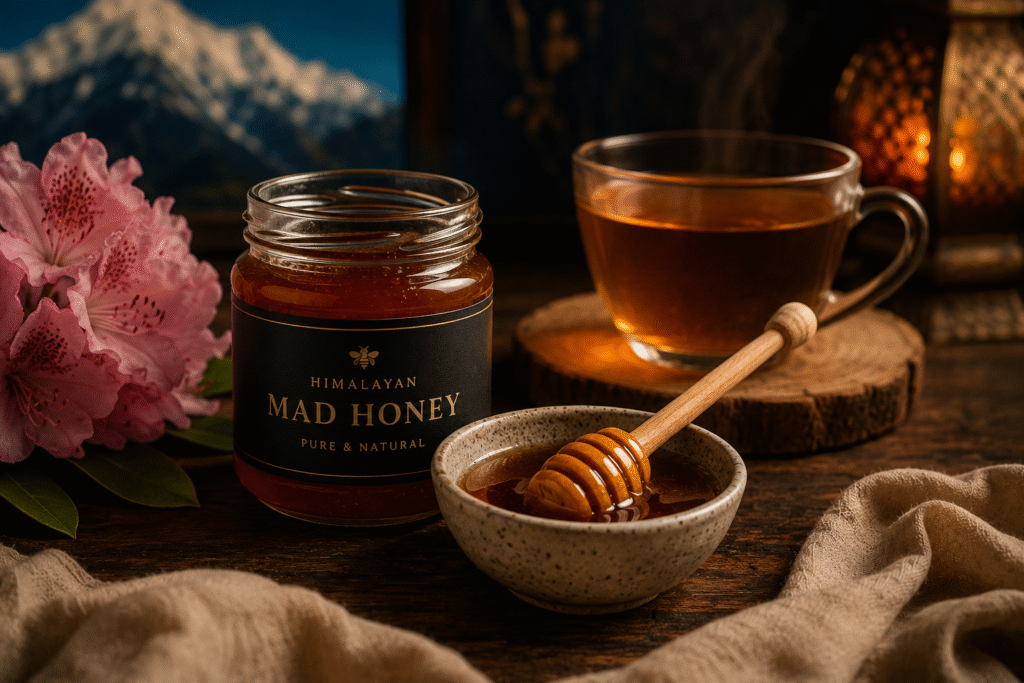
Most people come across mad honey through its reputation for energy and stamina. Fewer know about its quieter, less discussed evening use — a small amount taken at night as part of a wind-down ritual in certain Himalayan communities. It sounds contradictory until you understand how the honey’s active compounds actually work, and why the same substance can be experienced so differently depending on when and how it’s taken.
One Compound, Two Very Different Reputations
The explanation isn’t that there are two kinds of mad honey — it’s that grayanotoxins, the compounds responsible for mad honey’s effects, interact with the nervous system in a way that isn’t purely stimulating or purely sedating. Many long-term users describe an overall sensation of physical heaviness and warmth that settles in gradually. Depending on the setting, the amount, and the person, that same underlying sensation can register as an energizing lift during the day or a calming settle at night. Context shapes the experience as much as the chemistry does.
A Quieter Tradition, Rarely Talked About
In certain rural pockets of Nepal, older generations have used a small amount of mad honey stirred into warm water in the evening, treated much like other cultures treat a cup of chamomile tea before bed. This use predates mad honey’s international fame by generations and reflects a much more deliberate, unhurried approach than the purpose-driven daytime use tied to farming or the honey hunt itself. It’s rarely mentioned in modern marketing, which tends to lean almost entirely on the energy angle because it’s a more compelling sales pitch.
Don’t Mistake This for a Sedative
It would be a mistake to treat mad honey as equivalent to a sleep aid or an herbal sedative like valerian root. Those products act on specific neurotransmitter systems tied to drowsiness, and at least some have real clinical research behind their use. Mad honey’s grayanotoxins work on sodium channels throughout the nervous system instead — a broader, less targeted, and less predictable mechanism. If you’re dealing with a diagnosed sleep disorder, mad honey isn’t a substitute for medical treatment, and this article shouldn’t be read as suggesting otherwise.
What the Evening Sensation Reportedly Feels Like
Based on anecdotal accounts, a small amount taken in the evening tends to produce a gradual sense of physical heaviness, warmth spreading through the body, and a general quieting of mental chatter — different from the sudden drowsiness caused by, say, an antihistamine. Because grayanotoxin concentration shifts from batch to batch depending on rhododendron species, altitude, and harvest timing, the intensity of this sensation is genuinely unpredictable across different jars, which is exactly why we avoid giving specific dosage figures. Anyone experimenting with evening use should start minimally and observe rather than assume.
Realistic Expectations for This Use Case
If you’re specifically hoping mad honey will replace a sleep medication or supplement, temper that expectation. There’s no controlled clinical research validating it as an insomnia treatment — what exists is a specific traditional use pattern in certain communities plus scattered modern anecdotes. Treating it as an occasional, traditional part of winding down, rather than a guaranteed nightly solution, is the more accurate frame.
The Same Safety Rules Apply at Night
Nothing about evening use changes the underlying safety picture. Mad honey should never be paired with alcohol, sleep medication, or sedatives — combining substances that each independently affect the nervous and cardiovascular systems is not something to experiment with. Anyone with a heart condition, blood pressure concern, or who is pregnant or breastfeeding should speak with a doctor before trying mad honey at any time of day, and anyone on relevant medication should do the same.
Consistency Helps If You Plan to Use It Regularly
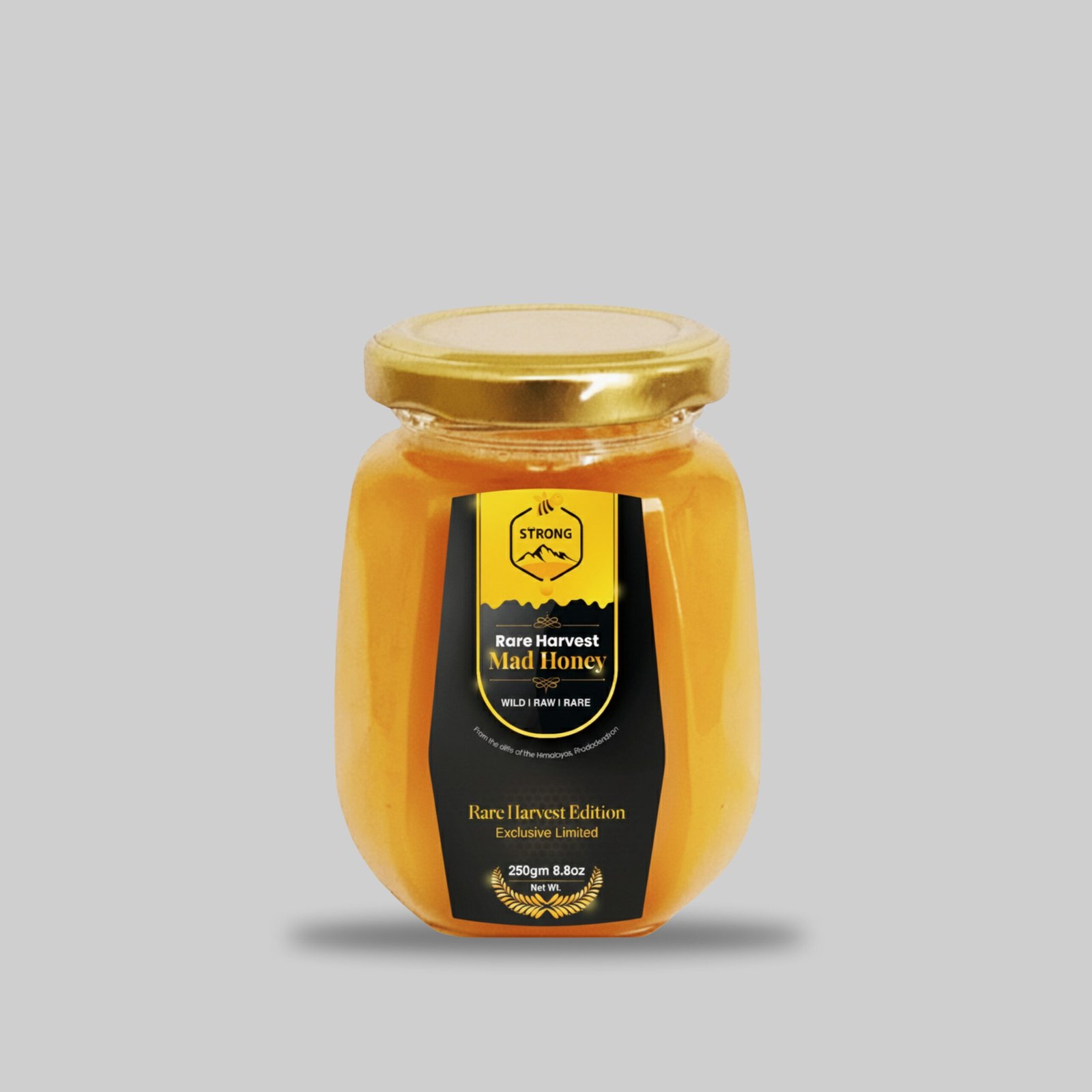
If evening use becomes something you want to repeat occasionally rather than try once, sourcing consistency starts to matter a lot. Buying from a supplier tied to a single, documented harvest gives you a far more predictable experience over time than switching between unverified sellers, where potency can swing wildly from jar to jar.
Frequently Asked Questions
Can mad honey help me sleep?
There’s no clinical research confirming it as a sleep aid. Some communities in Nepal have traditionally used small amounts in the evening as a wind-down ritual, and some modern users report a calming sensation, but it’s not a studied treatment for sleep problems.
Is it safe to take mad honey with sleeping pills?
No. It should never be combined with sleep medication, sedatives, or alcohol.
Why does the same honey feel different at night versus during the day?
The compound behind mad honey’s effects works the same way regardless of timing — how it’s experienced as energizing or calming depends heavily on amount, setting, and individual factors.
Should evening amounts be smaller than daytime amounts?
Traditional evening use tends to involve smaller amounts taken slowly, but we don’t publish exact figures. Start minimally at any time of day.
Is this a real, documented tradition or just internet folklore?
It reflects a genuine, if less publicized, evening use pattern in specific Himalayan communities, distinct from the better-known daytime stamina use.


