
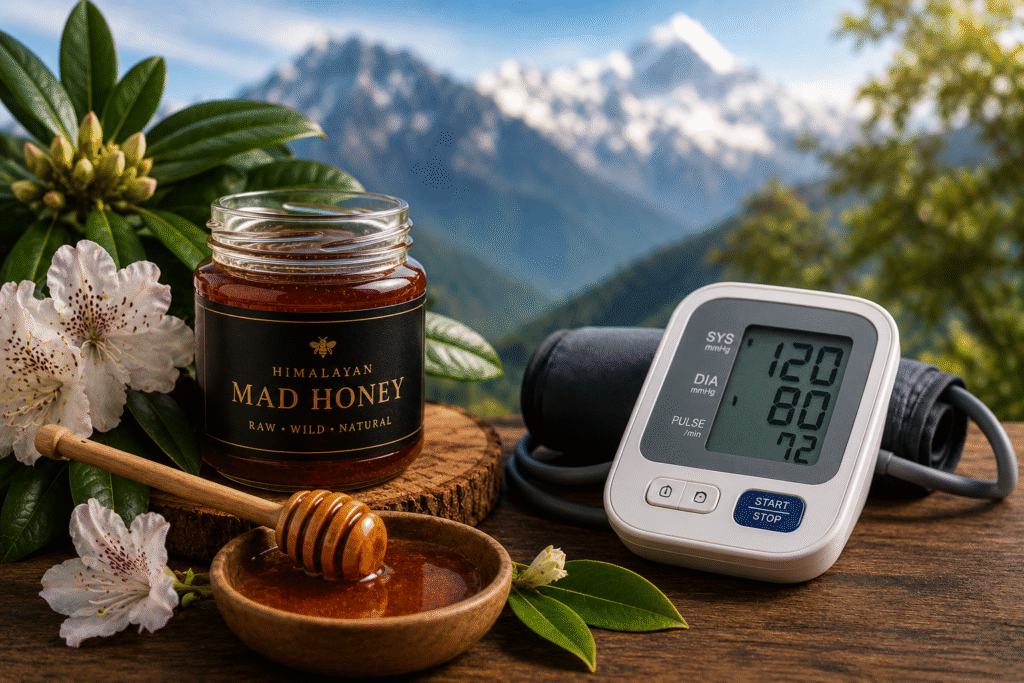
Nowhere is caution more warranted with mad honey than in its relationship to blood pressure. This isn’t a wellness angle worth softening for the sake of marketing — it’s a documented, clinically observed interaction between grayanotoxins and the cardiovascular system, and understanding it properly matters more than almost anything else covered on this site.
The Mechanism, in Plain Terms
Grayanotoxins are compounds found in the nectar of specific high-altitude rhododendron species. They bind to sodium channels in cell membranes, including cells in cardiac and vascular tissue, and hold those channels open longer than they’re meant to stay open. That disruption is what drives the well-documented shifts in heart rate and blood pressure associated with mad honey. It’s a mechanical, chemical interaction, not a mysterious traditional effect — and it’s the reason mad honey gets treated with far more caution than an ordinary jar of clover honey.
What Clinical Case Reports Actually Show
Most of the published medical literature on this topic comes from Turkish emergency medicine researchers, documenting patients who arrived at hospitals after consuming more mad honey than they realized, often mistaking it for a regular honey product. The recurring pattern in these reports: a slowed heart rate (bradycardia), low blood pressure (hypotension), dizziness, and occasionally more serious cardiac complications. Most cases resolve with supportive treatment — IV fluids, monitoring, sometimes medication to restore normal heart rate — within a matter of hours. Severe outcomes are uncommon but have been documented, generally tied to very large amounts or delayed care.
Why This Isn’t a Blood Pressure “Remedy”
Some corners of the internet frame this interaction as a natural way to manage high blood pressure. That framing is misleading and genuinely risky. What’s happening isn’t a controlled, therapeutic effect — it’s a pharmacological side effect of a compound whose potency is inherently unpredictable from one jar to the next. A real blood pressure medication is dosed precisely and monitored by a physician. Mad honey offers none of that consistency, which makes it the opposite of something to lean on for managing a real medical condition.
Groups Who Should Not Use Mad Honey
Given how directly grayanotoxins interact with cardiovascular function, the following groups should avoid mad honey entirely:
- Anyone with a diagnosed heart condition, arrhythmia, or history of cardiac events
- Anyone with existing high or low blood pressure, treated or untreated
- Anyone taking blood pressure medication, beta-blockers, or similar prescriptions
- Anyone who is pregnant or breastfeeding
- Anyone who has previously had a bad reaction to mad honey
If any of these apply to you, the safest choice is simply not to try it, confirmed with a doctor rather than decided alone.
Even Healthy Adults Aren’t Automatically in the Clear
It’s worth saying clearly: not having a diagnosed condition doesn’t guarantee immunity from a reaction. The effect on blood pressure depends heavily on the amount consumed relative to body weight and personal sensitivity, both of which vary widely. A generally healthy adult can still experience a meaningful drop in blood pressure from an unexpectedly strong batch — which is exactly why starting with the smallest possible amount applies to everyone, not only people with known risk factors.
Recognizing a Reaction Early
Knowing the warning signs matters. Reported symptoms include dizziness, excessive sweating, nausea, blurred vision, weakness, a noticeably slow heart rate, and fainting. If any of these show up after consuming mad honey, treat it seriously — sit or lie down, avoid exertion, and seek medical attention if symptoms don’t resolve quickly or feel significant. Don’t assume it will simply pass on its own.
Why Potency Can’t Be Standardized
Grayanotoxin levels shift with rhododendron species, hive altitude, harvest season, and even conditions within an individual hive. That natural variability is exactly why we don’t publish dosage figures anywhere on this site — a “safe amount” from one batch could be meaningfully stronger or weaker in the next, and treating every new jar as an unknown quantity is the only responsible approach.
Frequently Asked Questions
Does mad honey actually lower blood pressure?
Grayanotoxins can affect blood pressure, but this is a documented side effect of the compound’s mechanism, not a controlled or reliable treatment — it should never be used to manage blood pressure.
Is this risk exaggerated?
No. It’s supported by a consistent body of clinical case reports, primarily from Turkey, describing the same pattern of symptoms repeatedly.
Can healthy people still have a bad reaction?
Yes. Sensitivity depends on individual factors and batch potency, not just pre-existing conditions.
What should I do if I feel dizzy after trying mad honey?
Sit or lie down, avoid physical exertion, and seek medical attention if symptoms don’t resolve quickly.
Is it ever safe to combine mad honey with blood pressure medication?
No — speak with a doctor before considering mad honey at all if you’re on any heart-related prescription.
For more on the compound behind this effect, see our guide on Grayanotoxin Benefits. For tested, verified batches with transparent sourcing, visit our shop page.


