

Discover how Mad Honey from Nepal is made by wild bees from Rhododendron flowers in the Himalayan mountains. Learn about its origin, process, and natural benefits.
Mad Honey from Nepal – Nature’s Rare and Powerful Honey
Mad Honey from Nepal is one of the most mysterious and powerful natural honeys in the world. It’s harvested from the steep cliffs of the Himalayas, where giant wild bees (Apis dorsata laboriosa) collect nectar from rhododendron flowers. These flowers contain grayanotoxins, which make the honey unique, strong, and sometimes psychoactive in small doses.
How Mad Honey Is Made in the Himalayas
Collection of Nectar from Rhododendron Flowers
The process starts when the Himalayan giant bees collect nectar from Rhododendron arboreum, a flower that grows naturally between 2,000 to 3,000 meters above sea level. This nectar is what gives the honey its distinct reddish color and its unique properties.
Wild Bee Hives on Himalayan Cliffs
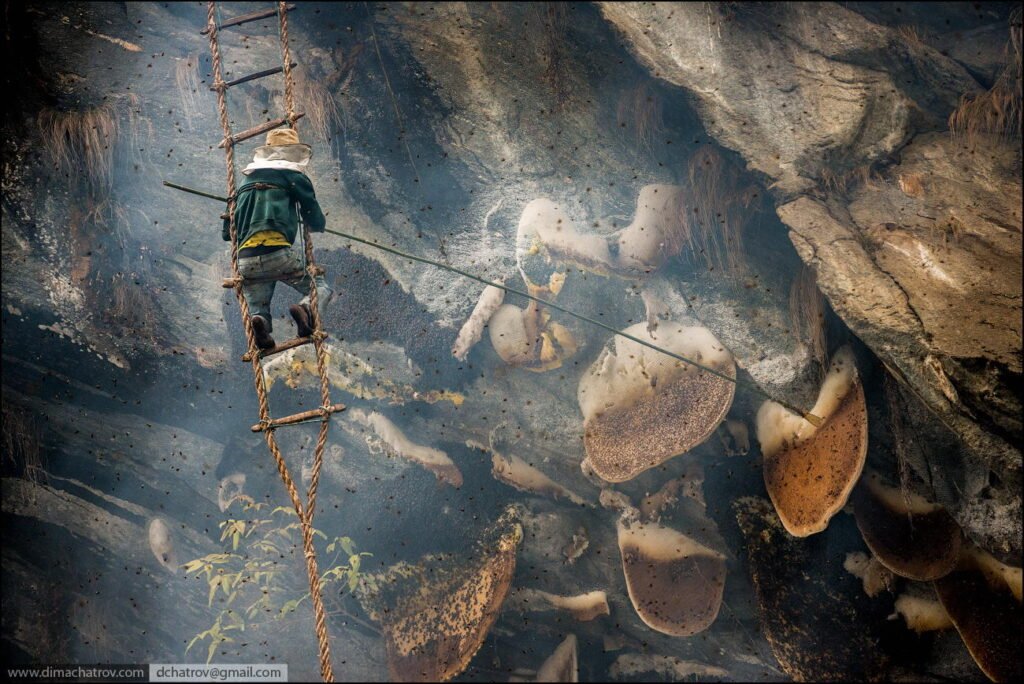
Unlike farmed honey, mad honey is not produced in wooden boxes. The bees make their hives on vertical mountain cliffs. Local Gurung tribes risk their lives climbing these cliffs with bamboo ladders to collect the honey — a tradition that has been passed down for centuries.
Extraction and Filtering
After harvesting, the honey is filtered using traditional methods. No artificial heating or chemical processing is done, so the natural enzymes, pollen, and nutrients remain intact.
Benefits and Cautions of Mad Honey
Natural Health Benefits
- Boosts immunity and energy levels
- Acts as a natural antibiotic
- Helps with joint pain and digestive issues
- Improves sexual stamina and overall vitality
Use with Care
Mad honey contains grayanotoxins, so it must be consumed in small quantities only (½ teaspoon daily). Overdose can cause dizziness or nausea. Always buy lab-tested Mad Honey from trusted sources.
Why Nepal’s Mad Honey Is World Famous
Nepal’s climate, altitude, and rhododendron-rich mountains make it the perfect natural environment for producing high-quality mad honey. The combination of pure air, untouched nature, and traditional collection methods gives it a strong, rare, and authentic taste — something no artificial process can replicate.
The Journey of Mad Honey From Nepal’s Remote Mountains
The story of mad honey from Nepal begins deep within the Himalayan mountains, where nature remains largely untouched by modern development. Unlike commercial honey farms, authentic Himalayan mad honey is produced entirely in the wild. Giant Himalayan honeybees travel across mountain forests collecting nectar from blooming rhododendron flowers that grow at high altitudes.
These remote environments provide ideal conditions for producing one of the world’s rarest honey varieties. The combination of clean mountain air, diverse plant life, and seasonal flowering cycles contributes to the distinctive characteristics that make Nepal mad honey highly sought after around the world.
The Role of the Giant Himalayan Honeybee
One of the most fascinating aspects of mad honey production is the bee responsible for creating it. The giant Himalayan honeybee, known scientifically as Apis dorsata laboriosa, is considered the largest honeybee species in the world.
These bees build enormous hives on steep cliff faces where predators have limited access. Living in such extreme environments allows them to collect nectar from plants that are rarely visited by other bee species. This unique relationship between the bees and the Himalayan ecosystem plays an important role in the production of authentic mad honey.
Unlike domesticated honeybees used in commercial honey farming, these wild bees remain completely dependent on nature. Their seasonal movements and nectar sources directly influence the quality and characteristics of each honey harvest.
Why Rhododendron Flowers Are Important
Rhododendron forests cover large areas of Nepal’s mountainous regions and are essential to the production of mad honey. During the flowering season, these colorful blossoms provide nectar that contains naturally occurring grayanotoxins.
As bees gather this nectar and convert it into honey, the resulting product develops characteristics that differ from ordinary honey. Because the concentration of nectar compounds varies naturally, each harvest may differ slightly in flavor, color, aroma, and overall strength.
This natural variation is one reason why experienced consumers value authentic Himalayan mad honey and appreciate its seasonal uniqueness.
Traditional Honey Hunting in Nepal
Harvesting mad honey remains one of the most dangerous and remarkable traditional practices in the world. Nepalese honey hunters often spend days traveling through rugged mountain terrain before reaching remote cliffside hives.
Using handmade rope ladders, bamboo tools, and traditional techniques passed down through generations, hunters carefully collect honey from towering cliff faces. The process requires courage, patience, and extensive experience.
For many local communities, honey hunting is more than a method of collecting food. It represents an important cultural tradition that connects families to their history, environment, and ancestral knowledge.
Why Authentic Mad Honey From Nepal Is Rare
Several factors contribute to the rarity of authentic Nepal mad honey.
First, production is limited to specific Himalayan regions where rhododendron flowers grow naturally. Second, harvesting only occurs during short seasonal periods when flowers are blooming and bees are actively collecting nectar.
Finally, the difficult harvesting process limits the amount of honey that can be collected each year. Unlike commercial honey operations that produce large quantities year-round, mad honey remains a limited and highly specialized product.
Because of these factors, genuine Himalayan mad honey continues to attract attention from consumers, researchers, and honey enthusiasts worldwide.
Sustainable Harvesting and Environmental Protection
Traditional honey hunters understand the importance of protecting bee populations and preserving natural habitats. Responsible harvesting methods help ensure that colonies can continue producing honey in future seasons.
Healthy forests, thriving pollinator populations, and sustainable harvesting practices all play important roles in maintaining the long-term availability of authentic mad honey from Nepal.
Supporting responsibly sourced honey products can help preserve these traditions while encouraging environmental conservation in mountain communities.
Frequently Asked Questions About Mad Honey From Nepal
Why is Nepal famous for mad honey?
Nepal’s high-altitude rhododendron forests, giant Himalayan honeybees, and centuries-old honey-hunting traditions create ideal conditions for producing authentic mad honey.
What makes Nepal mad honey different from ordinary honey?
Mad honey is produced from nectar collected from specific rhododendron flowers found in Himalayan regions. This gives it characteristics not commonly found in regular honey.
Is authentic mad honey harvested by hand?
Yes. Traditional honey hunters collect mad honey manually from cliffside hives using techniques that have been passed down through generations.
Why is Himalayan mad honey expensive?
The challenging harvesting process, seasonal availability, limited supply, and growing international demand all contribute to its higher value.
How can I identify authentic mad honey from Nepal?
Look for suppliers that provide clear sourcing information, transparent harvesting details, and products that originate from Himalayan regions of Nepal.
Does every harvest produce the same honey?
No. Weather conditions, flowering cycles, altitude, and nectar availability can all influence the characteristics of each harvest.
Final Thoughts
Mad Honey from Nepal is not just another type of honey — it’s a centuries-old natural treasure. Knowing how Mad Honey is made helps us appreciate the hard work of Nepalese honey hunters and the beauty of Himalayan nature.
If used correctly and responsibly, this golden-red honey can offer both unique taste and amazing health benefits.


