

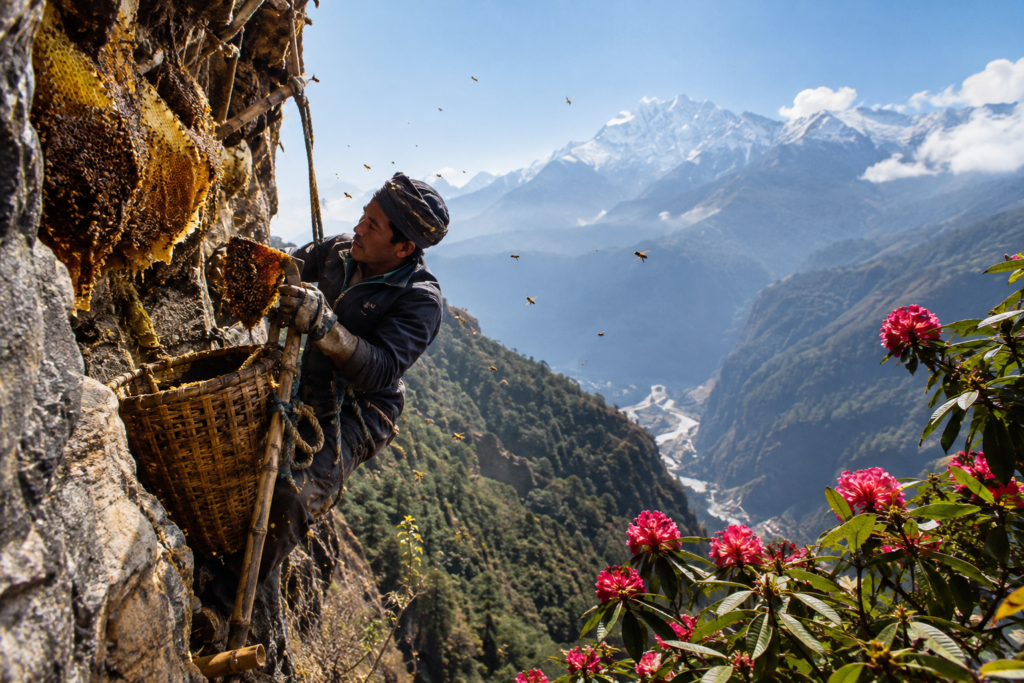
High in the mountains of Nepal, honey harvesting looks very different from ordinary beekeeping. There are no rows of wooden boxes sitting in a field. Instead, wild bee colonies can build their combs on enormous cliff faces, sometimes far above the ground. Reaching them requires experience, physical skill and an understanding of the mountains that has been developed over generations.
The people who harvest Himalayan mad honey are an important part of its identity. Their knowledge connects the wild bees, mountain flowers and difficult terrain with a centuries-old tradition of honey hunting.
But who are these honey hunters, and how does their work produce the mad honey that reaches consumers today?
Who Are Nepal’s Honey Hunters?
Traditional honey hunting in Nepal is strongly associated with mountain communities, including the Gurung people of central Nepal.
In areas such as Kaski, honey-hunting traditions have been documented alongside the Himalayan cliff bee, Apis laboriosa. Research on these communities has recorded not only their harvesting techniques but also the cultural and livelihood importance of honey hunting.
For experienced honey hunters, finding a colony is only the beginning. They need to recognise suitable cliffs, understand seasonal bee activity and assess the conditions before attempting a harvest. Mountain weather can change quickly, and working on steep rock faces requires considerable preparation.
The knowledge involved is practical rather than theoretical. It is built through experience and traditionally passed from one generation to another.
The Bee Behind Himalayan Mad Honey
The distinctive story of Nepalese mad honey begins with the bees. The Himalayan cliff bee, Apis laboriosa, is a wild honeybee associated with high-altitude mountain environments. Unlike bees kept in conventional managed hives, these bees establish colonies in natural locations, including steep cliffs.
Their natural surroundings influence the honey they produce. The bees forage among the plants available during their active season, and the floral sources can affect the honey’s aroma, colour, flavour and composition.
This is one reason Himalayan mad honey should not be viewed as simply another variety of ordinary table honey. Its character is closely connected to the environment where the bees live.
Why Rhododendron Matters
Rhododendron is one of the plants commonly associated with the mad honey story in Nepal. Several rhododendron species contain naturally occurring compounds known as grayanotoxins. When bees collect nectar from suitable rhododendron flowers, these compounds can be present in the resulting honey.
The amount can vary depending on factors such as floral sources, season and location. This natural variation is important because not every jar of honey from Nepal has the same characteristics.
The origin, floral sources and harvesting conditions all matter.
How Is Mad Honey Harvested?
Traditional cliff harvesting is one of the most remarkable parts of the story. A honey-hunting expedition begins with locating a suitable wild colony and assessing the surrounding cliff. Once the hunters decide that conditions are appropriate, they prepare the equipment needed to reach the comb.
Traditional methods have included rope ladders and other locally adapted tools. Historical documentation from Nepal describes honey hunters reaching cliff colonies and cutting portions of comb before lowering the harvest from the rock face.
The process demands coordination.
One person may be working close to the colony while others remain below to assist with equipment and the collected honeycomb. The terrain itself adds another layer of difficulty.
This is very different from opening a managed hive in a backyard apiary. The honey hunter is working with a wild colony in its natural environment, often in a location where access is difficult and potentially dangerous.
Why Is Mad Honey Seasonal?
Wild honey follows the rhythm of the environment. Bees collect nectar when flowering plants are available, which means the characteristics of a harvest can change with the season. Weather, altitude, local vegetation and flowering patterns can all influence the honey.
Rhododendron flowering is particularly relevant to traditional mad honey because of its connection with naturally occurring grayanotoxins. This seasonal nature also helps explain why authentic mad honey may show natural differences between batches.
One harvest mad honey may have a slightly different colour, aroma or texture from another. Natural variation is not necessarily a sign that something is wrong; it is part of working with a product produced by wild bees in a changing environment.
What Makes Authentic Mad Honey Different?
Authenticity cannot be established simply by looking at a jar. A dark colour or thick texture may be interesting characteristics, but appearance alone does not prove where honey came from.
A better approach is to consider the complete sourcing story. Ask where the honey was harvested, which bees produced it, how it was collected and whether the seller provides meaningful information about quality control.
This becomes especially important as mad honey has become more widely available online. Products sold under the same name may come from very different sources. A transparent supply chain gives buyers more confidence than a label filled with vague claims.
From Traditional Harvesting to Modern Testing
Traditional harvesting gives Himalayan mad honey its origin story, but modern quality control has an important role too.
Laboratory testing can provide information that cannot be confirmed from appearance or taste alone. Depending on the testing performed, analysis can help assess purity and the presence or level of particular compounds.
For a naturally variable product such as mad honey, this additional information is valuable.
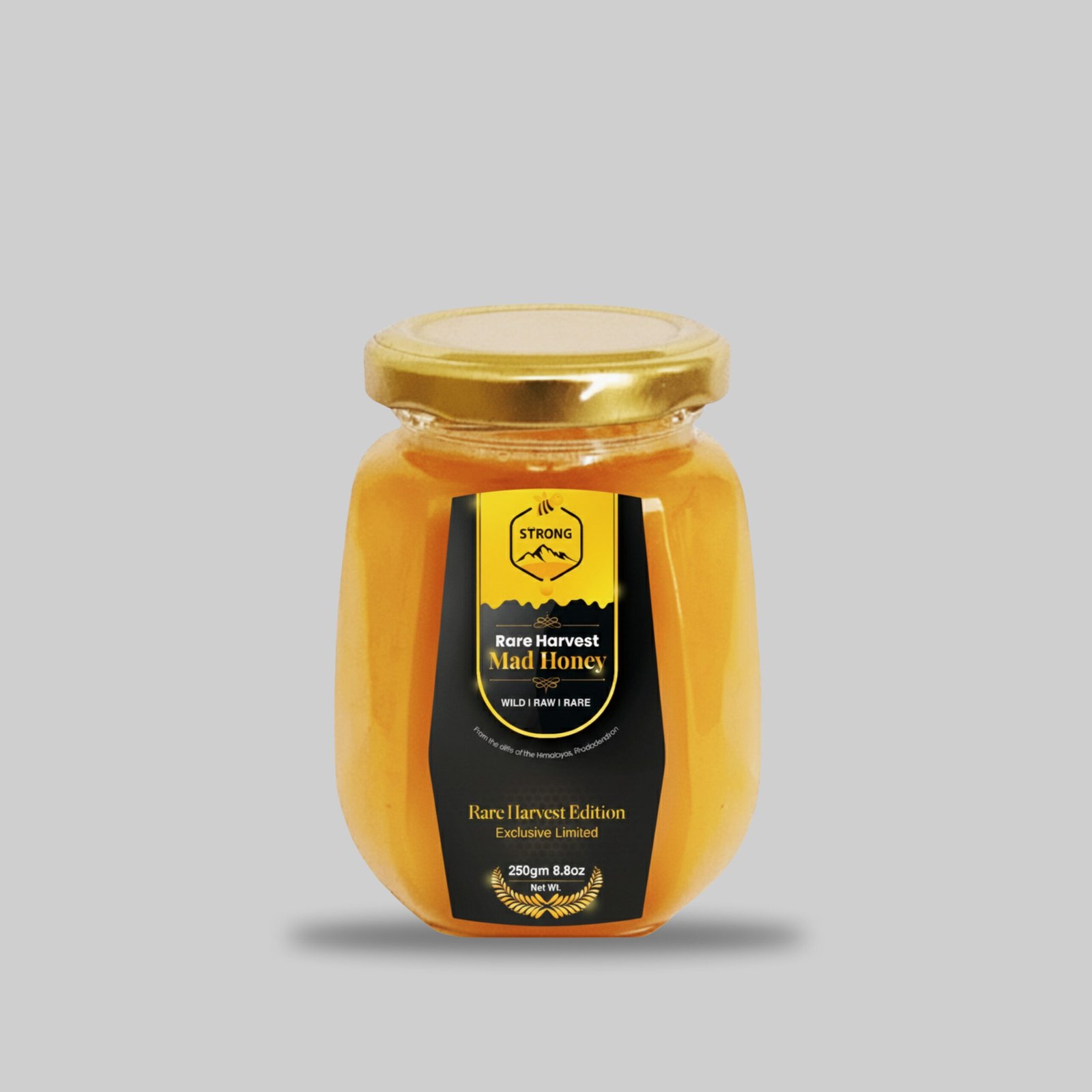
Strong Mad Honey combines the traditional identity of Nepalese wild-harvested honey with a modern focus on laboratory testing and product traceability. The brand’s website describes its honey as sourced from Nepal’s Himalayan regions and associated with Gurung honey hunters, while its product pages highlight lab testing and batch verification.
That combination is important: traditional origin tells you where the story begins, while testing and traceability help provide more information about what is actually in the jar.
Why Responsible Honey Hunting Matters
The honey itself is only one part of the Himalayan ecosystem. Wild bees depend on suitable nesting sites, flowering plants and a healthy natural environment. The communities that harvest honey also depend on these resources.
Research on Apis laboriosa in Nepal has raised concerns about declining populations and highlighted the need to protect both the bees and the traditional knowledge connected with honey hunting.
This makes responsible harvesting more than a marketing phrase. Protecting wild bee populations and their habitats helps preserve the ecological system that makes traditional Himalayan honey possible in the first place.
It also helps protect the knowledge of the communities that have practised honey hunting for generations.
What Should You Look for When Buying Mad Honey?
If you are looking for authentic mad honey from Nepal, start with the source rather than the marketing language.
A reliable seller should be able to explain:
- Where the honey comes from
- Whether it is wild-harvested or produced from managed hives
- What type of bees are associated with the harvest
- How the honey is handled after harvesting
- Whether laboratory testing is available
- How the product can be traced to its batch or source
Be cautious of sellers who make extraordinary claims but provide little information about origin or quality.The more transparent the sourcing story is, the easier it is for customers to make an informed decision.
The Story Behind Strong Mad Honey
We focuses on wild-harvested Himalayan mad honey and highlights its connection with traditional Gurung honey hunters. The website also emphasises raw honey, laboratory testing and traceability as part of its approach to product quality.
This connection between traditional harvesting and modern quality control is what gives the product its identity.
Rather than treating mad honey as an ordinary sweetener, the focus is on preserving the characteristics that make Himalayan honey distinctive while giving customers more information about its origin and quality.
A Tradition Worth Understanding
The next time you see a jar of Nepalese mad honey, remember that its story began long before it was packaged.
It began with wild bees moving through Himalayan landscapes, seasonal flowers providing nectar and experienced honey hunters navigating cliffs to reach colonies that cannot be accessed like ordinary hives.
The Gurung honey hunters are an important part of that story. Their knowledge of the mountains and wild bees has helped sustain a distinctive honey-harvesting tradition that continues to attract attention around the world. For buyers, understanding this background makes it easier to appreciate what authentic mad honey actually represents.
It is not simply honey with an unusual name. It is a product shaped by wild bees, Himalayan flora, seasonal conditions, traditional knowledge and careful sourcing.


