What is Himalayan honey? Himalayan honey is honey that bees make from the wildflowers, trees, and shrubs of the Himalayan mountains, mainly in Nepal, northern India, Bhutan, and nearby areas. It is not one product. It ranges from everyday multifloral honey from hive bees to wild cliff honey from the world’s largest honey bee, including the dark red honey that people call Himalayan mad honey. The name “Himalayan honey” is a marketing term, not a protected one, so the type and origin matter far more than the label. This guide explains the types, the origins, and how to buy safely.
What Is Himalayan Honey?
The FDA describes honey as a substance that bees make as food from flower nectar and store in honeycombs. Himalayan honey follows the same rule, but the nectar comes from mountain flowers, forest trees, and shrubs such as rhododendrons. Because the flowers change with altitude and season, no two harvests taste the same. Most Himalayan honey is multifloral, which means the bees visited many plants instead of one crop. A smaller share comes from wild bees that nest on cliffs, and that is the honey people usually mean when they talk about rare Himalayan honey.
Where Does Himalayan Honey Come From?
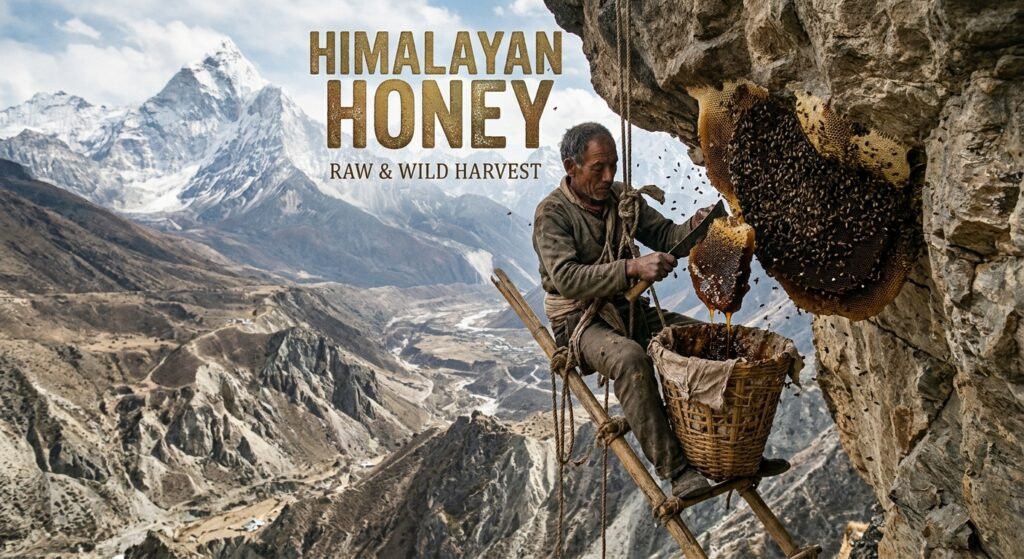
Most of it comes from Nepal and from the Himalayan states of India, with smaller amounts from Bhutan and nearby regions. Nepal alone has four native honey bee species. Apis cerana, the Asian hive bee, and the European honey bee are the only bees that people keep in hives there. The other native bees live wild: Apis laboriosa, the Himalayan cliff bee, builds combs on rock faces; Apis dorsata, the giant honey bee, hangs open combs from trees in warmer foothills; and Apis florea, the little honey bee, builds small combs in shrubs. Scientists call Apis laboriosa a spectacular but poorly understood species, largely because it nests on cliffs that are very hard to reach. If you are looking for honey of Nepal in particular, our page on Nepali mad honey explains the region in more detail.
Types of Himalayan Honey
This table shows the main types of Himalayan honey and how they differ:
| Type | Bee | How people get it | Good to know |
|---|---|---|---|
| Multifloral hive honey | Apis cerana | Hill beekeepers keep hives and harvest mixed wildflower honey | The most common Himalayan honey |
| Wild forest honey | Apis dorsata | Honey hunters harvest open combs in trees | Seasonal and usually sold in small amounts |
| Cliff honey (spring and autumn) | Apis laboriosa | Honey hunters harvest combs from cliffs | Taste and color change with altitude and season |
| Himalayan red honey | Apis laboriosa | Spring harvest at high altitude | Often the honey called mad honey |
| Chiuri honey | Mainly hive bees | Made from the flowers of the Chiuri tree in Nepal’s hills | A regional specialty |
Bee scientists describe three kinds of cliff honey: red honey from spring harvests at high altitude, spring honey from middle and lower altitudes, and autumn honey from any site. That is why two jars labeled “cliff honey” can taste and look different.
What Is Himalayan Red Honey?
Himalayan red honey, also written red Himalayan honey, is the dark, reddish spring honey that wild Himalayan cliff bees make at high altitude. In Nepal, people call cliff honey bhir maha, and they often call the red kind rato maha. Its color comes from the nectar the bees collect, including rhododendron blossoms in spring. This honey is not ordinary honey. It is the honey most often sold as Himalayan mad honey, and it can contain grayanotoxins, natural toxins that can cause poisoning. Because harvesting is difficult and quantities are small, red honey often costs several times more than regular honey.
What Is Himalayan Mad Honey?
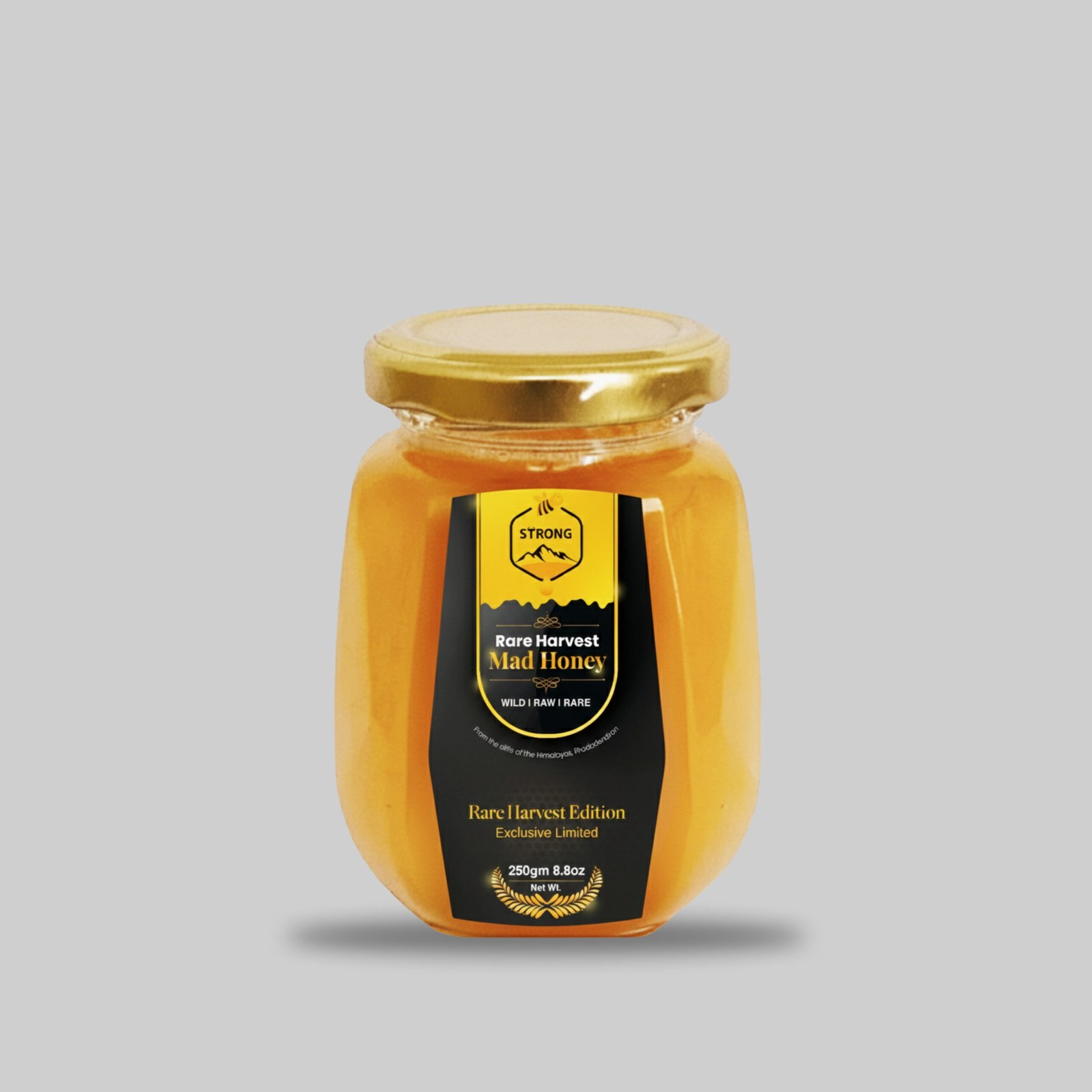
Himalayan mad honey is honey that contains grayanotoxins from rhododendron nectar. In Nepal, the cliff bee Apis laboriosa makes it, and honey hunters collect it by hand from high rock faces. Doctors treat the reaction to mad honey as poisoning. Symptoms can include dizziness, nausea, a slow heart rate, and low blood pressure, and some people need hospital care. You can read the full list of symptoms in our guide to mad honey effects. The nicknames hallucinogenic honey and hallucinating honey exist, but doctors do not describe a safe or predictable experience, and we explain the facts in our guide to hallucinogenic honey. For the full background, see our complete guide to mad honey.
Is Himalayan Mad Honey Legal?
It depends on the country. Many places treat it as a food, and some restrict or ban imports. South Korea prohibits it, and Australia and New Zealand limit honey imports strictly. Read our guide on whether mad honey is legal before you order, and check your own country’s rules.
What Is Himalayan Red Honey Good For? Benefits and Traditional Use
People in Nepal have used red honey in traditional practice for generations. Science has not confirmed those uses. A 2012 review hosted by the National Institutes of Health found little scientific evidence for the medical uses of grayanotoxin honey, and it warned that such use may even be harmful. For that reason, we make no health claims about Himalayan red honey. The same caution applies to ordinary Himalayan honey. We found no reliable evidence that it is healthier than other honey, and honey is still a sugar. Never give honey to a baby under 12 months old, because it can carry spores that cause infant botulism, as the CDC explains.
What Is the Himalayan Honey Method?
Online, you will see the “Himalayan honey method” or “Himalayan honey trick.” There is no real method behind the label. It is a social media and advertising label that covers different mixes, such as honey with pink salt for men or honey with spices for memory. Some ads promise that a spoonful of honey can fix memory loss. The FDA warns that marketers pitch products with unproven claims that they can prevent, treat, delay, or cure Alzheimer’s disease. We found no reliable scientific evidence that any honey recipe does this. You may also see cider honey from the Himalayas. That name appears in viral recipes that mix honey with apple cider vinegar, and it is not a special type of Himalayan honey.
What Makes Himalayan Honey Special?
Four things set the best Himalayan honey apart:
- Wild flowers: bees forage on mountain plants that change with altitude and season
- Wild harvest: some honey comes from cliff colonies that nobody can farm in boxes
- Skilled harvesting: the Gurung people of Nepal have gathered cliff honey for generations
- Limited supply: harvests are small, and cliff bee numbers have fallen in parts of Nepal
Experts who study cliff bees recommend harvesting only part of each comb, so the colony can survive. A good seller will tell you how the honey was harvested.
How to Spot Real Himalayan Honey
Use this checklist before you buy:
- Look for the bee species, such as Apis cerana or Apis laboriosa
- Look for the region, the harvest season, and the altitude
- Ask for a lab test or batch information
- Be careful with very low prices, because rare cliff honey costs more
- Avoid any seller who says honey cures disease
- Check that red or mad honey carries a clear safety warning
Our guide to original mad honey explains authenticity in more detail. Honey sold in India must also meet standards set by the Food Safety and Standards Authority of India.
Where to Buy Himalayan Honey
If you ask where to buy Himalayan honey, start with the rules, then the seller. First, check the law for your country, because import rules differ. Second, choose a seller who names the species, region, and season. For everyday multifloral honey, local shops and specialty stores often stock it. For rare red honey, buy only from sellers who give clear origin details and safety information.
Be careful on marketplaces. If you search for Himalayan mad honey on Amazon or similar sites, check the seller’s details and the full ingredient list. Products such as gummies that use the Himalayan mad honey name are not the same as raw honey, and their labels may not tell you how much grayanotoxin they contain.
When people ask where can I buy mad honey, or how to buy Himalayan mad honey, our answer is the same: buy only where it is legal, and only from open sellers. You can see our range in our shop, and you can read our guides to buying mad honey in the USA and the UK. Whether you search for Himalayan red honey for sale, Himalayan mad honey for sale, or any other form, check legality first and put safety first.
Himalayan Honey FAQ
What is Himalayan honey?
Himalayan honey is honey that bees make from wild flowers and trees in the Himalayas, mainly in Nepal and northern India. It includes hive honey, wild forest honey, and cliff honey.
What is Himalayan red honey?
Himalayan red honey is the dark spring honey that cliff bees make at high altitude. It is often called mad honey, and it can contain grayanotoxins.
What is Himalayan mad honey?
It is honey that contains grayanotoxins from rhododendron nectar. In Nepal, the cliff bee Apis laboriosa makes it. Doctors treat the reaction as poisoning.
Is Himalayan mad honey legal?
It depends on the country. Many places treat it as a food, but some restrict or ban imports. Check your local rules before you order.
Is Himalayan red honey good for you?
People use it traditionally, but science has not confirmed health benefits. It can cause poisoning, so we make no health claims.
What is the Himalayan honey method?
It is a viral label for different honey mixes, not a proven method. No honey recipe is a proven treatment for memory loss.
Where can I buy Himalayan honey?
Check your country’s rules first. Then buy from a seller who names the bee species, region, and season, and who gives clear safety information.
Does Himalayan honey cure anything?
No. We found no reliable evidence that Himalayan honey prevents or treats disease. Avoid sellers who promise cures.
Final Answer: What Is Himalayan Honey?
Himalayan honey is honey from the wild flowers of the Himalayas, and it comes in several types: everyday multifloral honey, wild forest honey, cliff honey, and the red honey known as Himalayan mad honey. The name is a marketing term, so always look for the species, region, and season. Treat red honey with care, because it can contain grayanotoxins and cause poisoning. Check your local law, avoid health promises, and buy from sellers who are open about where their honey comes from.
Sources and References
- https://www.fda.gov/food/guidance-documents-regulatory-information-topic/guidance-industry-proper-labeling-honey-and-honey-products
- https://pmc.ncbi.nlm.nih.gov/articles/PMC7390808
- https://pmc.ncbi.nlm.nih.gov/articles/PMC3404272
- https://www.fda.gov/consumers/consumer-updates/watch-out-false-promises-about-so-called-alzheimers-cures
- https://www.cdc.gov/botulism/
- https://www.fssai.gov.in
Disclaimer: This article gives general information only. It is not medical or legal advice. Honey can cause allergic reactions, and red or mad honey can cause poisoning. If you feel unwell after eating honey, call your local emergency number or seek urgent medical care.