

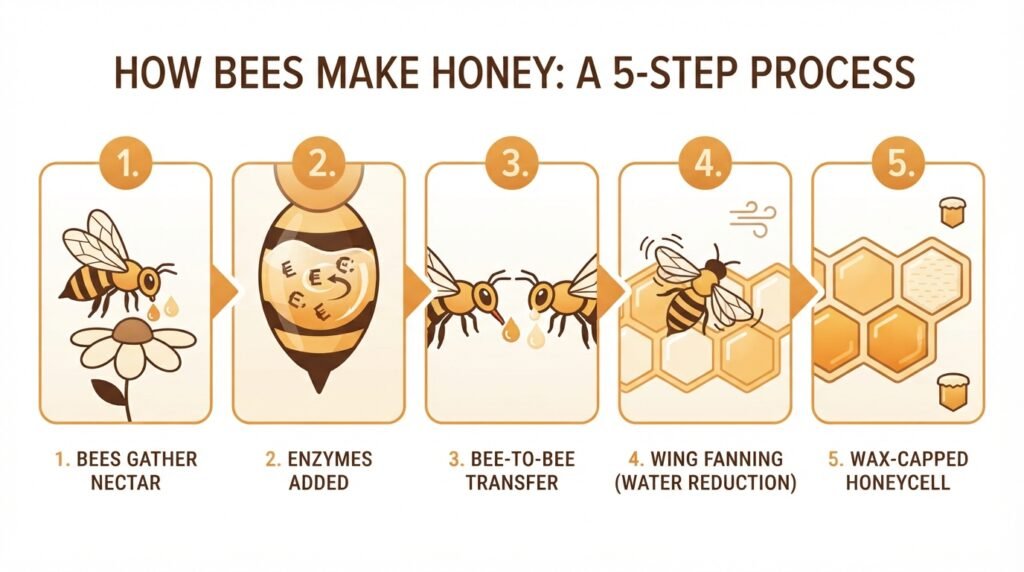
Bees make honey by collecting flower nectar, mixing it with enzymes in their honey stomachs, passing it from bee to bee, and fanning it with their wings until most of the water evaporates. They then seal the thickened honey inside wax cells. Nectar is about 80% water. Finished honey is about 17% to 18% water.
Key Takeaways
- Honey starts as flower nectar, not as something bees find ready-made.
- Foragers add the enzyme invertase while they carry nectar home.
- House bees pass the nectar mouth to mouth for about 20 to 30 minutes.
- Bees fan the nectar with their wings to cut the water from about 80% to about 18%.
- Bees cap the ripe honey with wax so it keeps through winter.
- Bees make honey to feed their colony. Beekeepers harvest only the surplus.
In This Guide
- Why bees make honey
- How bees make honey step by step
- How honey bees make honeycomb and a hive
- Which bees make honey
- How much honey bees make
- How honey gets from the hive to your jar
- How mad honey differs
- FAQs and sources
Why Do Bees Make Honey?
Bees make honey as stored food. It feeds the colony when flowers are scarce, especially in winter. A colony cannot find nectar in the cold months, so it builds a large reserve while flowers bloom.
A healthy colony makes more honey than it needs. Beekeepers harvest part of that surplus. In 2025, U.S. beekeepers harvested an average of 48 pounds of honey per producing colony, according to the USDA National Agricultural Statistics Service honey report.
How Do Bees Make Honey Step by Step?
Honey bees make honey in five steps: foraging, enzyme treatment, hand-off, dehydration, and capping.
Step 1: Foragers Collect Nectar
Worker bees fly from flower to flower and suck up nectar through a straw-like tongue called a proboscis. They store the nectar in a second stomach, the honey stomach or crop. This stomach is separate from the bee’s digestive stomach.
A honey stomach holds about 70 milligrams of nectar. A bee may visit up to 1,500 flowers to fill it, according to a column by a USDA Agricultural Research Service scientist in Food Technology magazine.
Step 2: Enzymes Start Turning Nectar Into Honey
While the forager flies home, enzymes in her honey stomach go to work. The enzyme invertase splits sucrose, the main sugar in nectar, into two simpler sugars: glucose and fructose. Mississippi State University Extension explains this process in plain terms.
Step 3: House Bees Take Over
Back at the hive, the forager passes her nectar to house bees. The house bees move it from mouth to mouth. Each hand-off adds more enzymes. Another enzyme, glucose oxidase, makes the honey acidic and helps protect it from bacteria. The mouth-to-mouth stage lasts about 20 to 30 minutes.
Step 4: Bees Fan Out the Water
The bees deposit the nectar into wax cells. Nectar can hold up to 80% water, so it would ferment if left alone. Bees line up and beat their wings to push warm air across the cells. According to a USDA researcher, they can fan about 11,000 times a minute. The water content drops to about 18%.
Step 5: Bees Seal the Honey With Wax
When the honey is ripe, bees cover each cell with a thin wax cap. The cap locks out moisture and air. Low water and natural acidity then keep the honey stable for months in the hive.
Honey-Making Process at a Glance
| Stage | Who does it | What happens | Key number |
|---|---|---|---|
| Collecting | Forager bee | Sucks nectar into the honey stomach | Up to 1,500 flowers per trip |
| Enzyme treatment | Forager and house bees | Invertase splits sucrose into glucose and fructose | 20 to 30 minutes of hand-offs |
| Drying | House bees | Wing fanning evaporates water | From about 80% to about 18% water |
| Capping | House bees | Wax seal closes each cell | Honey keeps through winter |
How Do Honey Bees Make Honeycomb?
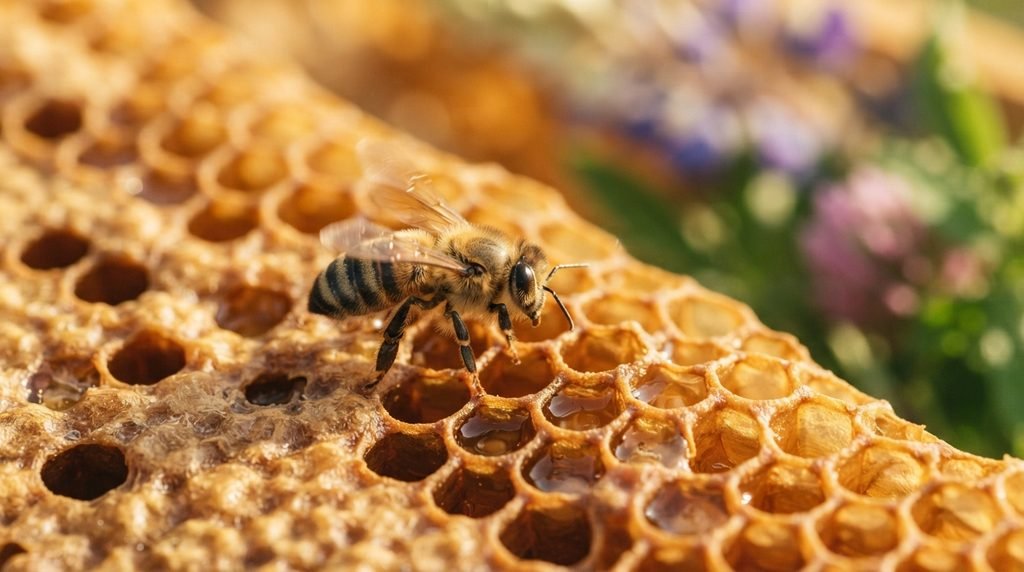
Worker bees make honeycomb from beeswax, which they produce in glands on their abdomens. Young workers secrete tiny wax flakes. They chew the flakes, shape them, and build rows of six-sided cells.
The six-sided shape lets cells share walls, so the bees use less wax and store more honey. Bees must eat a large amount of honey to make wax, which is one reason honey production costs the colony so much energy.
Bees use the comb for three jobs: storing honey, storing pollen, and raising young bees.
How Do Honey Bees Make a Hive?
Honey bees do not build the hive itself. They build the comb inside a sheltered cavity. In the wild, that cavity is a hollow tree or a rock crevice. Beekeepers give colonies a wooden box with removable frames, and the bees build their comb on those frames.
A colony has one queen, thousands of female workers, and some male drones. The queen lays eggs. The workers do nearly everything else, including foraging, nursing, cleaning, building comb, and making honey. Drones do not forage or make honey.
Which Bees Make Honey?
Honey bees (genus Apis) make the honey people eat. The world has roughly 20,000 bee species, and most of them do not make honey. Most bees live alone and raise their young on pollen. A few others, such as stingless bees, store small amounts of honey. Honey bees make it in large quantities.
How Much Honey Do Bees Make?
One pound of honey takes nectar from about two million flowers. A single worker makes only a tiny amount in her short life, so a colony’s output comes from thousands of bees working together.
USDA data show how the totals look at national scale:
- U.S. honey production reached 116 million pounds in 2025, down 14% from 2024.
- Beekeepers ran 2.41 million honey-producing colonies.
- Average yield was 48 pounds per colony.
- Honey averaged $3.05 per pound.
Source: USDA NASS Honey report, March 2026.
Yield changes with weather, flower supply, region, and colony strength.
Do Bees Make Honey for Humans?
No. Bees make honey for themselves. Beekeepers take the surplus and leave enough honey for the colony. A responsible beekeeper checks stores before winter so the bees do not starve.
How Does Honey Get From the Hive to the Jar?
Beekeepers pull frames from the hive, cut off the wax caps, and spin the frames in an extractor. The spinning flings the honey out of the comb. The beekeeper then strains the honey and pours it into jars. Raw honey skips heavy heating and fine filtering. Processed honey is often heated and filtered more, so it stays liquid longer.
The USDA grades honey by color, from water white to dark amber. Lighter honeys usually taste milder. Darker honeys usually taste stronger.
Is All Honey Made the Same Way? What About Mad Honey?
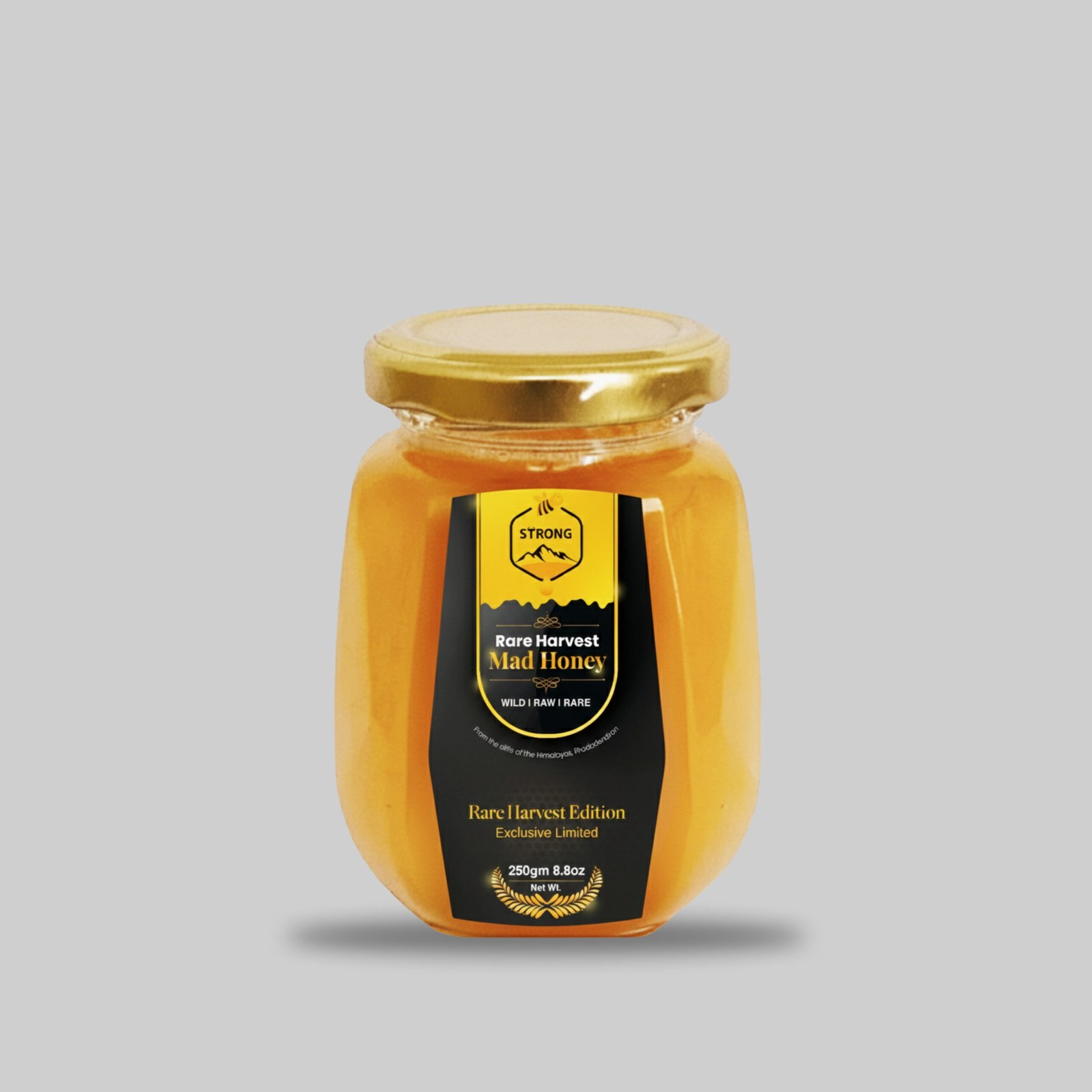
Yes. The bees follow the same process. The flowers change the honey. Mad honey is a good example. It comes from wild Himalayan honey, where bees feed on rhododendron nectar. That nectar can carry natural compounds called grayanotoxins.
The bee process described above stays the same: collect, add enzymes, fan, and cap. The nectar source changes the color, taste, and potency. Mad honey is darker, thicker, and more bitter than everyday honey.
Safety note: Grayanotoxins can cause dizziness, nausea, and a slow heartbeat in larger amounts. Anyone with a health condition, anyone taking medication, and anyone who is pregnant, breastfeeding, or under 18 should skip it or talk to a doctor first. This article gives general information and does not give medical advice.
Want to learn more? Read the Mad Honey FAQs, see our story, or browse our Nepal mad honey collection. Readers in the U.S. can also see our mad honey USA shipping page. Visit our blog for more guides on honey and bees.
Frequently Asked Questions
How do bees make honey in simple words?
Bees drink flower nectar, add enzymes to it, share it with other bees, and fan it with their wings until it thickens. They then seal it in wax cells.
Do bees make honey from pollen or nectar?
Bees make honey from nectar. Pollen is a separate food that gives bees protein.
Do bees throw up honey?
Not exactly. Bees pass nectar from their honey stomach back out through their mouths. They do this several times to add enzymes. It is not the same as vomiting, because the nectar never enters the digestive stomach.
How long does it take bees to make honey?
The enzyme stage takes about 20 to 30 minutes. Drying the honey takes longer and depends on weather and nectar flow. It often takes days.
How do honey bees make honeycomb?
Worker bees secrete wax flakes from glands on their abdomens. They chew the wax and shape it into six-sided cells.
Can babies eat honey?
No. The U.S. Centers for Disease Control and Prevention advises against giving honey to children under 12 months because of the risk of infant botulism. See the CDC botulism information.
Why does honey never spoil?
Honey has very low water content and is naturally acidic. These conditions make it hard for bacteria and yeast to grow.