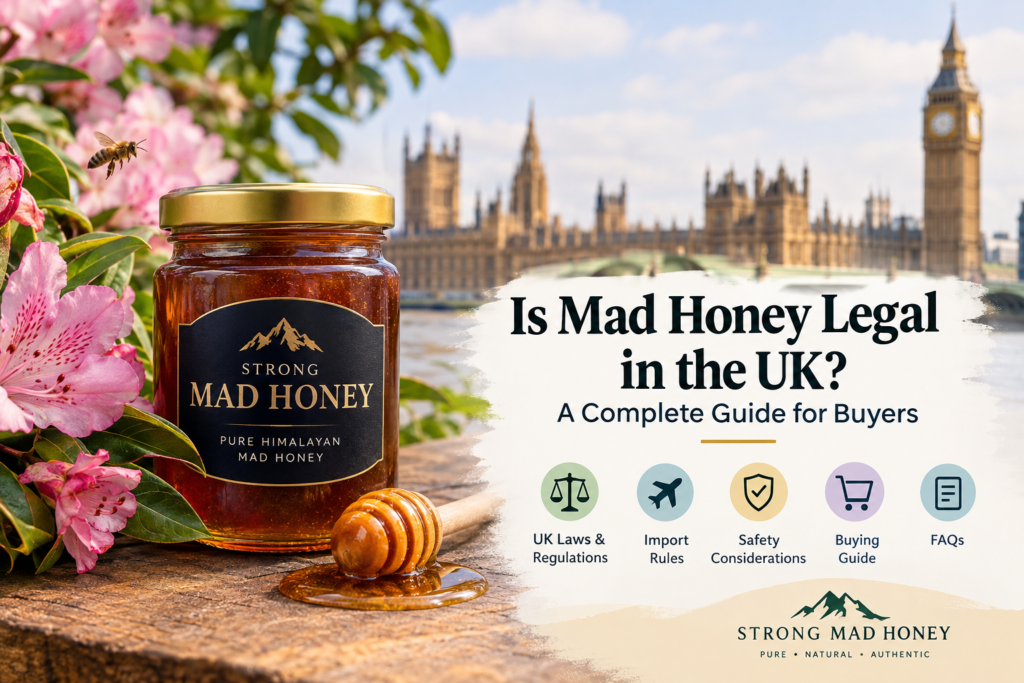
Mad honey has become a topic of curiosity among people interested in unusual honey varieties and traditional Himalayan products. However, before purchasing it, many UK consumers ask an important question: is mad honey legal in the UK?
The answer is not as straightforward as a simple yes or no. Mad honey is not automatically prohibited simply because it contains naturally occurring compounds, but products sold or imported into the United Kingdom must meet the applicable legal requirements. Food safety, import conditions, labelling and the way a product is marketed can all affect its legal status.
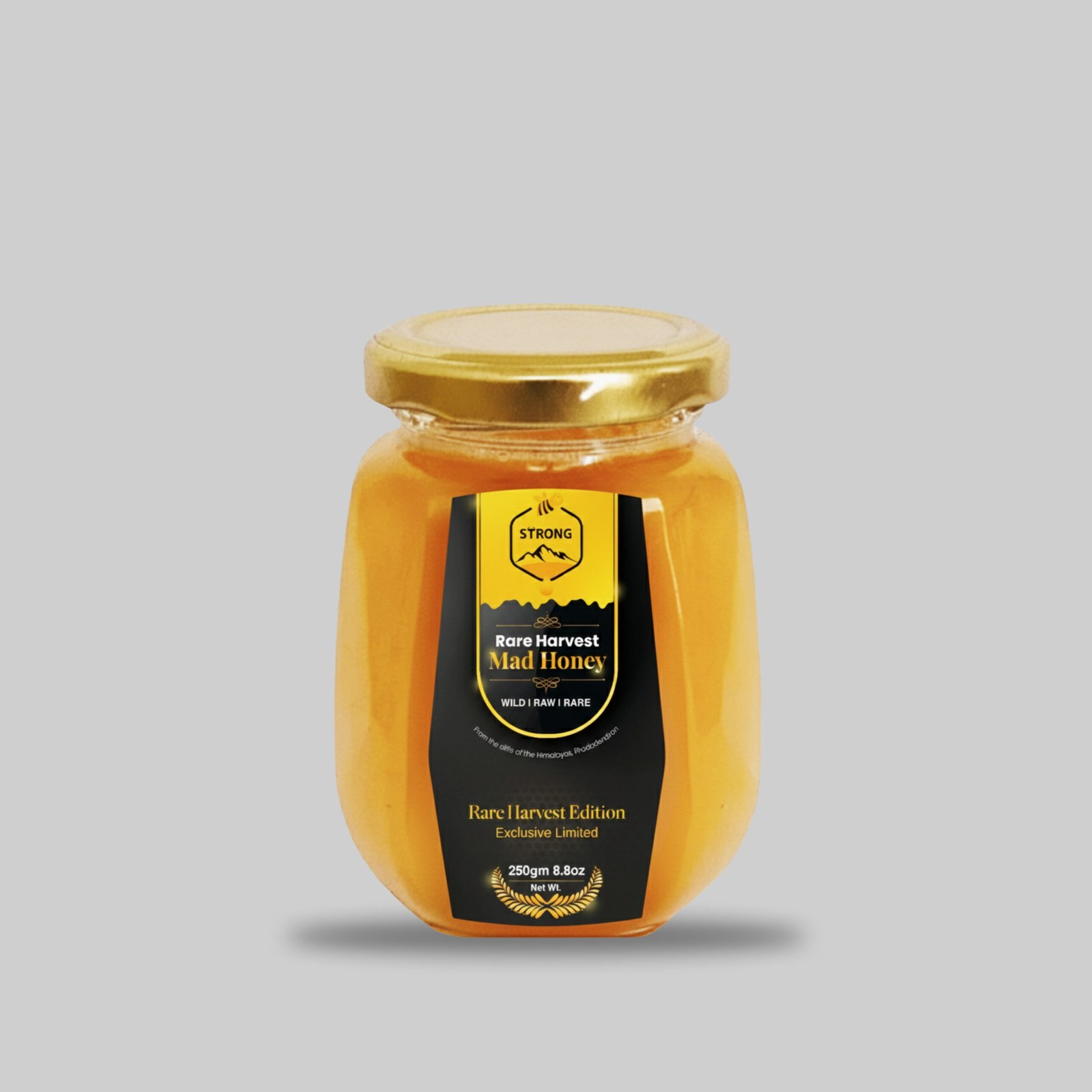
In this guide, we explain the key considerations for UK buyers, explore the rules that may apply to mad honey, and share practical steps to take before making a purchase.
Is Mad Honey Legal in the UK?
Mad honey is a type of honey produced when bees collect nectar from certain rhododendron flowers. Some of these flowers contain naturally occurring compounds called grayanotoxins, which can enter the honey.
There is no specific blanket prohibition on mad honey identified in the official sources discussed in this guide. However, this should not be interpreted as confirmation that every mad honey product can legally be sold, imported or consumed in the UK.
Food products must comply with applicable safety requirements, and unsafe food must not be placed on the market. A particular product’s legal position may depend on its composition, intended use, import circumstances and compliance with relevant regulations.
For buyers, the important distinction is between a product being available online and that product meeting all applicable UK requirements.
What Makes Mad Honey Different from Regular Honey?
Mad honey differs from ordinary honey because it may contain grayanotoxins. These naturally occurring substances are associated with certain rhododendron species and can affect the nervous system and cardiovascular system.
Traditional mad honey is produced in several regions, including parts of the Himalayas and Türkiye. Its colour, taste, texture and chemical composition can vary according to the floral source and harvesting conditions.
Unlike conventional honey, the concentration of grayanotoxins can differ considerably between samples. This means that appearance and flavour alone cannot establish how potent a particular batch may be.
UK Laws and Regulations That May Apply to Mad Honey
Understanding whether mad honey can be sold in the UK requires looking at the broader food law framework rather than relying on a single statement about legality.
1. Food Safety Requirements
The Food Safety Act 1990 and applicable general food law establish important requirements for food businesses operating in the UK.
Food must satisfy relevant safety requirements, and businesses must not place unsafe products on the market. For mad honey, this makes the presence and potential effects of grayanotoxins a significant consideration.
A product being natural, traditionally harvested or sold as a speciality food does not automatically exempt it from food safety requirements.
2. Honey Labelling Rules
Honey sold in the UK is subject to applicable composition, description and labelling requirements. Product information must be accurate and must not mislead consumers about its identity or characteristics.
Depending on the product and sales arrangements, businesses may need to consider ingredient information, origin details, net quantity, traceability and other applicable labelling obligations.
Sellers should verify which rules apply to their specific product instead of assuming that ordinary honey labelling practices are sufficient for every unusual honey variety.
3. Advertising and Health Claims
Businesses should be careful when describing the potential effects of mad honey. Claims that a product treats a disease, provides a guaranteed medical benefit or is safe for everyone require particular scrutiny.
Traditional use is not the same as established clinical evidence. Responsible product descriptions should distinguish verifiable characteristics from unproven health claims.
Can You Buy Mad Honey Online in the UK?
UK consumers may come across mad honey through specialist retailers, independent websites and overseas sellers. However, an online listing does not establish that the product complies with UK food law.
Before purchasing, consider these practical checks:
- Research the seller: Look for clear business details, contact information and transparent purchasing terms.
- Check the origin: Review the information provided about where the honey was harvested and produced.
- Request relevant testing information: Where available, look for batch-specific laboratory documentation that addresses grayanotoxins.
- Review product details: Check the description, quantity, origin information and other applicable labelling details.
- Avoid unsupported health promises: Be cautious of marketing that presents mad honey as a proven treatment or guarantees particular effects.
- Understand delivery conditions: Check whether the seller explains the import requirements relevant to shipments entering the UK.
These steps help you assess a seller’s transparency, but they cannot independently guarantee that a product is safe or legally compliant.
Can You Import Mad Honey From Nepal to the UK?
Mad honey from Nepal may attract interest from consumers looking for products associated with Himalayan harvesting traditions. However, international shipping involves more than simply placing an order with an overseas supplier.
Honey imported into the UK must meet the applicable import conditions. Requirements may depend on the country of origin, the product’s classification, the destination within the UK and whether the shipment is for personal or commercial purposes.
Commercial importers should verify the relevant food import controls, documentation, traceability and labelling requirements before arranging a shipment.
Personal imports should also be checked against the rules that apply to the particular circumstances. Buyers should not assume that a product is permitted merely because a seller offers international delivery.
Is Mad Honey Safe to Consume?
Legality and safety are two separate issues. Even where a product is available for purchase, consumers should understand its potential risks.
Grayanotoxins can affect the body’s cardiovascular and nervous systems. Reported symptoms of mad honey poisoning include dizziness, nausea, vomiting, sweating, low blood pressure and an unusually slow heartbeat.
The severity of the effects can vary, and toxin concentrations may differ significantly between batches. Looking at the honey or tasting it cannot reliably determine its grayanotoxin content.
Consumers should not assume that a small quantity is automatically safe. People who develop concerning symptoms after consuming mad honey should seek urgent medical advice.
For buyers, reliable information about product composition and appropriate safety documentation is more useful than unsupported claims about purity or potency.
How to Evaluate a Mad Honey Seller
When researching mad honey in the UK, focus on transparent product information rather than dramatic marketing claims.
A responsible seller should provide clear details about the product’s origin, identity and relevant characteristics. Where testing is available, documentation should be specific enough to identify what was tested and which batch the results cover.
Buyers should also review the seller’s terms, delivery information and approach to product safety. If important details are missing, asking questions before purchasing is a sensible step.
For businesses, maintaining traceability and confirming regulatory compliance are essential parts of responsible trading. A professional-looking website or positive customer reviews alone cannot establish that a food product meets legal requirements.
Final Thoughts
So, is mad honey legal in the UK? The answer depends on the product and the legal requirements that apply to its sale or importation. The absence of a specific prohibition does not automatically mean that every product is approved for the UK market.
Consumers should look for transparent product information and understand the potential risks associated with grayanotoxins. Sellers and importers should verify the relevant food safety, import, labelling and advertising requirements before offering mad honey to UK customers.
At Strong Mad Honey, we believe that informed decisions begin with clear product information, responsible communication and respect for the difference between traditional origins and established safety evidence.
Frequently Asked Questions
Is mad honey illegal in England?
No specific blanket prohibition on mad honey was identified in the official sources reviewed. However, this does not establish that every product is lawful to sell or import. Applicable food safety and other legal requirements must still be satisfied.
Can I order mad honey from Nepal to the UK?
Whether a shipment can be imported depends on the applicable import conditions and the circumstances of the order. Check current official guidance before purchasing from an overseas supplier.
Is mad honey a controlled drug in the UK?
Mad honey is a type of honey, and the presence of naturally occurring grayanotoxins does not automatically make it a controlled drug. Food safety rules remain relevant regardless of its classification under drug legislation.
How can I check whether mad honey is genuine?
Review the seller’s sourcing information and ask for relevant product documentation. Batch-specific laboratory testing may provide useful evidence about composition, although it does not automatically establish overall safety or legal compliance.
Where can I find reliable information about mad honey safety?
The Food Standards Agency’s Honey Risk Profile is a useful starting point for understanding grayanotoxins and the potential risks associated with certain honey varieties.