


If you’ve never tried it before, the first spoonful of mad honey can be a surprise. It doesn’t taste like the clover or wildflower honey sitting in your kitchen cupboard. So what does mad honey taste actually like and why does it hit so differently?
In this guide, we’re breaking down the real flavor profile of mad honey, what changes it from batch to batch, how it compares to a gentler cousin like orange blossom honey, and what a genuine, high-quality jar should taste like versus a weak or diluted one.
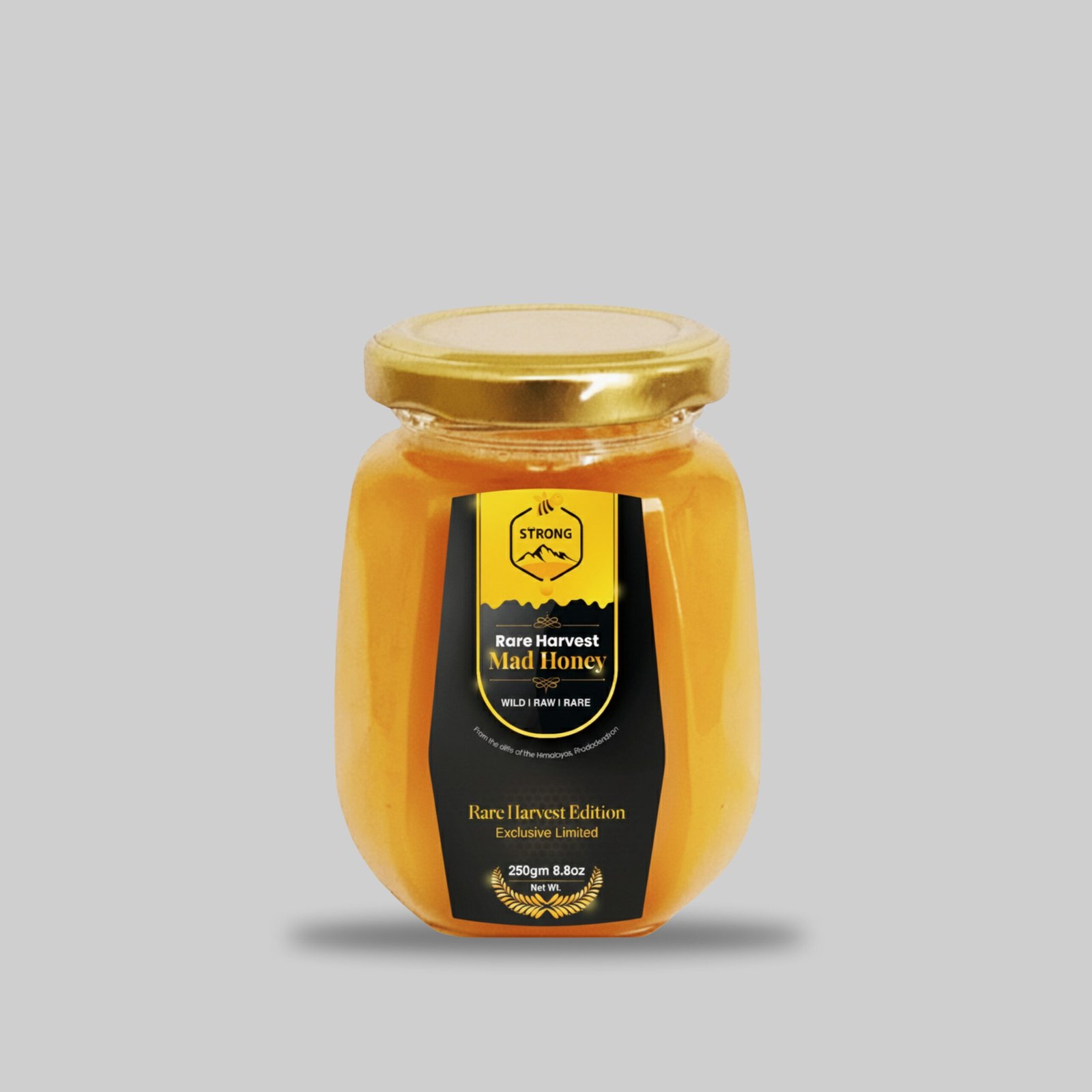
What Does Mad Honey Taste Like?
Most people describe mad honey taste as bitter-sweet, earthy, and slightly medicinal — with a peppery or herbal aftertaste that lingers on the back of the tongue. Unlike regular honey, which is straightforwardly sweet, mad honey often opens sweet and finishes bitter, almost like dark honey mixed with bitter herbs.
This distinct taste comes from grayanotoxins natural compounds found in the nectar of rhododendron flowers that bees forage from in high-altitude regions like Nepal and the Black Sea coast of Turkey. These same compounds are responsible for mad honey’s well-known effects, so the bitterness isn’t a flaw it’s a sign of authenticity.
People new to mad honey often note:
- Initial sweetness that’s less sugary than regular honey
- A bitter, herbal bite midway through
- A warm, slightly numbing sensation on the tongue or throat
- An earthy, woody aftertaste that regular honey doesn’t have
How First-Time Tasters Usually React
Because the flavor is so unlike anything else in a typical pantry, first impressions vary a lot. Some people are caught off guard by the bitterness and assume the honey has gone bad — it hasn’t. Others notice the numbing or warming sensation in the throat before they even register the taste itself. A common pattern reported by first-time tasters is: sweetness first, a sharp herbal turn a few seconds later, then a lingering warmth that can last several minutes. Knowing this ahead of time helps set the right expectations, so the experience feels intentional rather than off-putting.
Factors That Influence Mad Honey’s Flavor
- Region of origin. Nepali Himalayan mad honey tends to be darker, more bitter, and stronger due to higher grayanotoxin concentration from wild rhododendron forests at extreme altitude, often above 8,000 feet. Turkish (Anatolian) mad honey from the Black Sea region is generally milder, slightly sweeter, and easier for first-timers to start with.
- Harvest season. Spring harvests, when rhododendrons are in full bloom, typically produce a more intense, bitter flavor because the nectar is freshest and most concentrated. Later-season harvests can taste noticeably softer, since bees begin foraging on a wider mix of flowers.
- Altitude of the hives. Higher-altitude harvests generally mean stronger potency and a sharper bitter edge, since bees at those elevations forage almost exclusively on wild rhododendron rather than a diluted mix of other plants.
- Purity and processing. Raw, unprocessed mad honey retains its full bitter-earthy character. Honey that’s been heated, filtered aggressively, or blended with regular honey will taste noticeably flatter, sweeter, and less distinct — a red flag for anyone expecting the real thing.
- Age and storage. Mad honey’s flavor isn’t static in the jar. Over months of storage, it can mellow slightly as some compounds settle, and natural crystallization may begin, especially in cooler climates. Crystallized mad honey often tastes slightly less sharp than fresh liquid honey, though the core bitter-earthy profile stays intact. Storing it in a cool, dark place preserves both taste and potency for longer.
What Does Honey Made From Orange Blossom Taste Like?
For comparison, it helps to look at a completely different honey style. So, what does honey made from orange blossom taste like? It’s light, delicately sweet, and floral — with a citrusy aroma that mirrors the scent of fresh orange blossoms themselves.
Where mad honey is bold and bitter, orange blossom honey is smooth and mellow. It has:
- A light golden color, much lighter than mad honey’s dark amber-to-brown shade
- A subtly sweet, citrus-floral taste with no bitterness
- A soft, fruity aroma reminiscent of orange groves
- No psychoactive or medicinal effects — it’s a purely culinary honey
Mad Honey vs Orange Blossom Honey: Taste Comparison
Feature | Mad Honey | Orange Blossom Honey
Primary Taste | Bitter-sweet, earthy, medicinal | Light, floral, citrusy sweetness
Aftertaste | Peppery, lingering, warming | Clean, mild, no bitterness
Color | Dark amber to reddish-brown | Pale gold
Source | Wild rhododendron nectar | Orange blossom nectar
Effects | Contains grayanotoxins | None — standard table honey
Nepal vs Turkey: Does Origin Change the Taste Noticeably?
Since we source from both regions, it’s worth breaking this down further. Himalayan mad honey from Nepal is harvested from some of the highest and most remote rhododendron forests in the world, which generally makes it darker in color, more bitter, and more intense in both taste and potency. It’s the choice for people who want the strongest, most traditional flavor experience.
Anatolian mad honey from Turkey’s Black Sea coast tends to be a shade lighter, with a slightly smoother bitterness and less of a sharp aftertaste. It’s often recommended as a starting point for people trying mad honey for the first time, before moving on to the more intense Himalayan variety.
How to Taste Mad Honey Safely
Because of its grayanotoxin content, mad honey should always be tasted in small amounts — never by the spoonful like regular honey. A common starting serving is roughly a quarter to half a teaspoon, taken on an empty stomach so its effects can be felt clearly and safely.
To properly experience the full flavor:
- Take a small amount on a spoon and let it sit on your tongue for a few seconds before swallowing
- Notice the initial sweetness, followed by the bitter-herbal finish
- Avoid mixing it with tea or food the first time, so you can taste it in its purest form
- Wait at least 20–30 minutes before considering more, since effects build gradually
Always source mad honey from a trusted, lab-tested supplier to ensure it’s authentic and safely harvested — potency and taste vary significantly between low-quality and premium wild-harvested batches.
Frequently Asked Questions
Does mad honey taste bad?
Not bad but it is an acquired taste. The bitterness surprises first-time tasters, but many come to prefer its complex, earthy profile over standard honey’s one-note sweetness.
Why does mad honey taste bitter?
The bitterness comes from grayanotoxins in rhododendron nectar. The more potent the honey, the more pronounced the bitter, peppery finish tends to be.
Is stronger-tasting mad honey more potent?
Generally, yes a sharper bitter taste often correlates with higher grayanotoxin concentration, though this isn’t a guaranteed measure of potency on its own.
Can I mix mad honey with tea to hide the taste?
You can, but it’s recommended to taste it plain first so you can accurately gauge both the flavor and the effects before diluting it.
What does low-quality mad honey taste like compared to authentic mad honey?
Diluted or low-quality mad honey often tastes overly sweet with only a faint bitter note, sometimes with no lingering warmth at all. Authentic, wild-harvested mad honey has a pronounced bitter-earthy finish and a noticeable warming sensation, even in small amounts — a useful way to gauge authenticity before relying on labels alone.
Final Thoughts
The mad honey taste is unlike anything else on the market bold, bitter, earthy, and unmistakably wild. Whether you’re comparing it to the delicate sweetness of orange blossom honey or trying it for the first time, understanding the flavor helps set the right expectations before your first spoonful.
Ready to experience it for yourself? Explore our authentic, lab-tested Himalayan and Anatolian mad honey wild-harvested at source and shipped worldwide.


