

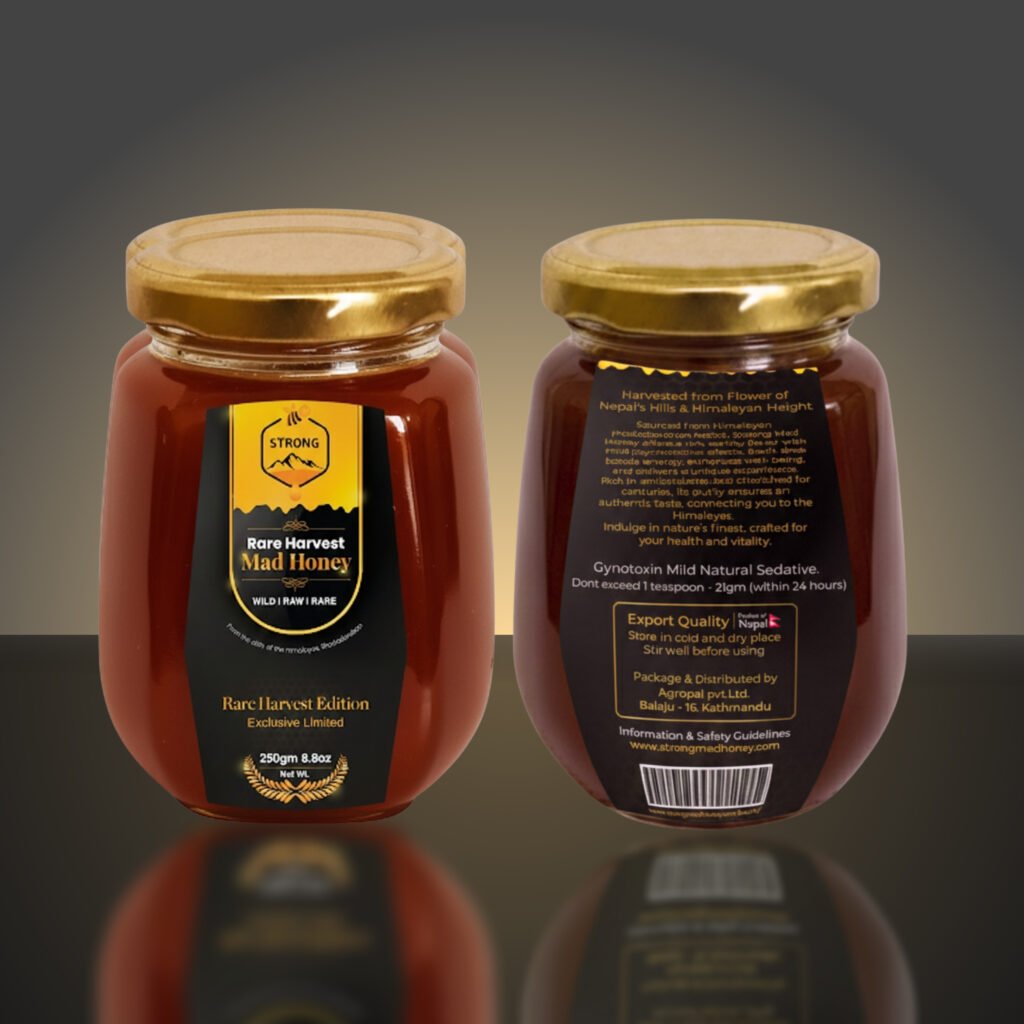
What Is Mad Honey? It’s a rare, wild honey produced by bees that forage on rhododendron flowers growing at high altitude in Nepal and along Turkey’s Black Sea coast. Unlike ordinary honey, it contains natural compounds called grayanotoxins, which come directly from the rhododendron nectar and give the honey its distinct effects, taste, and reputation. This guide brings together everything worth knowing about mad honey in one place, with links to a full, dedicated article on every specific topic if you want to go deeper.
The Short Answer
If you only read one paragraph on this page, let it be this one. Mad honey is a type of honey made by bees that collect nectar specifically from rhododendron species growing in mountainous regions, primarily Nepal’s Himalayan foothills and Turkey’s Black Sea coast. That specific nectar source is what separates mad honey from every other honey on the market. It contains grayanotoxins, naturally occurring compounds that interact with the nervous system, which is why the honey has a noticeable effect on the body when consumed, unlike regular honey.
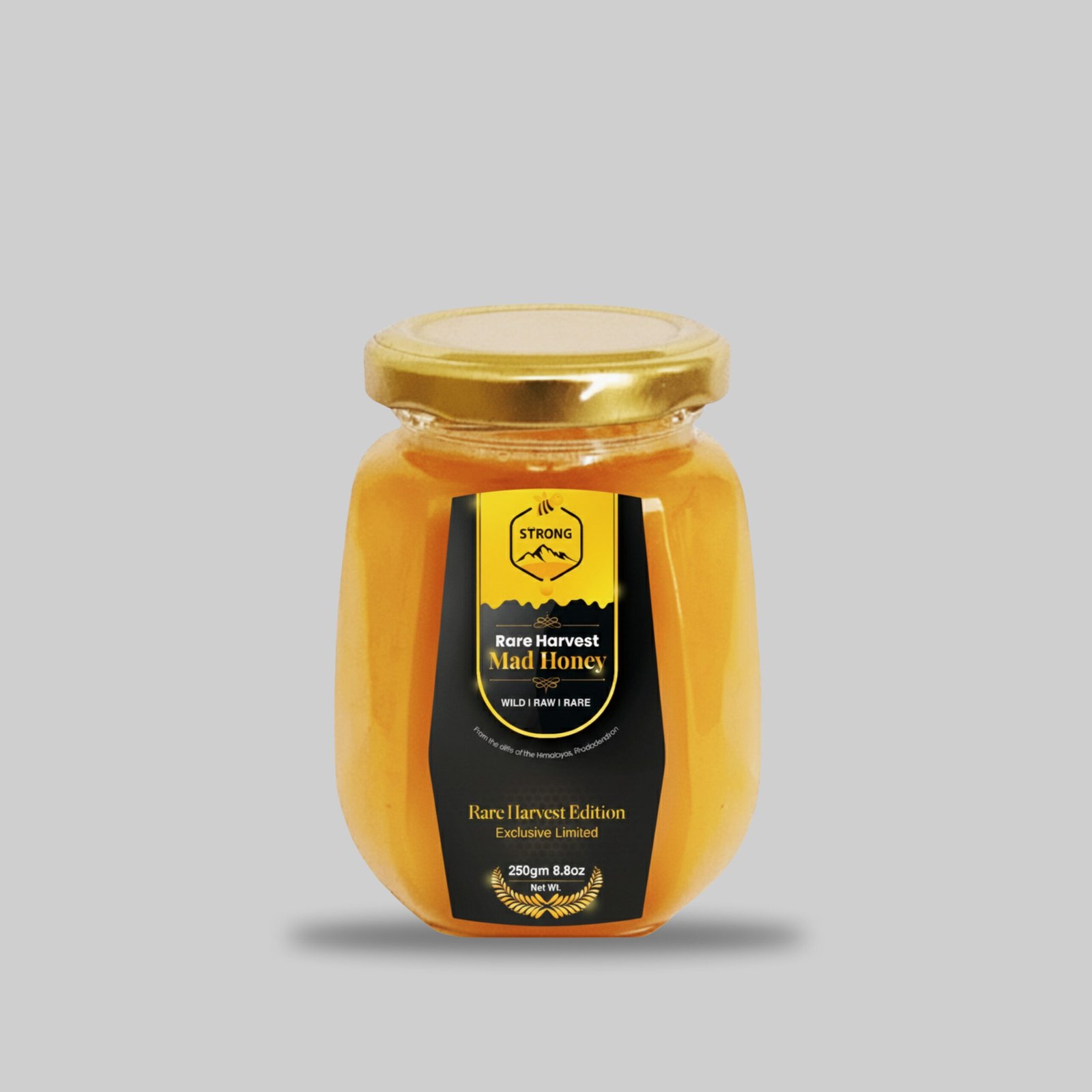
Where Mad Honey Comes From
Mad honey’s story starts with a specific plant family and a specific insect. The bees responsible for producing it, primarily the giant Himalayan honeybee (Apis laboriosa) in Nepal, forage on rhododendron flowers that bloom at high altitude during limited seasonal windows. This narrow, specific origin is what makes mad honey rare, and it’s also why it can’t be replicated through ordinary beekeeping. For the full botanical and geographic picture, see our dedicated guide on Mad Honey Origin, and for a look specifically at the flowers responsible, see Rhododendron Flowers.
What Makes It Different From Regular Honey
The defining difference between mad honey and regular honey comes down to one thing: grayanotoxin content. Regular honey, made from common flowering plants like clover or wildflowers, doesn’t contain this compound in any meaningful amount. Mad honey does, and that single distinction shapes everything else about the product, from its taste and color to its price and safety profile. Our guide on What Makes Mad Honey Different walks through every point of comparison in detail.
What It Tastes Like
Mad honey has a noticeably different flavor from regular honey. Where most honey is straightforwardly sweet, mad honey tends to carry a darker, more bitter, sometimes slightly peppery or earthy finish. This isn’t a flaw or a sign of low quality; it’s a natural result of its rhododendron origin. For a full breakdown of flavor notes and what to expect on your first taste, see What Does Mad Honey Taste Like.
Its Appearance and Smell
Mad honey typically looks and smells distinct from lighter, more common honey varieties. It tends to be darker in color, ranging from deep amber to a reddish brown, and it often carries a more robust, herbal aroma than the simple floral scent of clover or wildflower honey. We’ve covered both of these in dedicated detail: see Mad Honey Color and Mad Honey Smell for the full picture.
A History That Goes Back Over Two Thousand Years
Mad honey isn’t a modern discovery. Written accounts describing its effects date back to at least 401 BCE, when the Greek historian Xenophon documented soldiers becoming disoriented after eating wild honey near the Black Sea. That historical record continues through Ottoman-era Turkish accounts and into the honey’s modern international recognition today. For the complete timeline, see Mad Honey History.
Regional Varieties: Nepal and Turkey
While mad honey is associated with a few specific regions, Nepal and Turkey are the two most significant sources, and they differ in meaningful ways. Nepali mad honey is generally harvested at higher altitudes from wild, undomesticated hives, while Turkish mad honey, often called deli bal, comes primarily from the lower-altitude Black Sea region and has a longer history in Western markets. For the full regional breakdown, see Himalayan Mad Honey, Nepal Mad Honey, and Turkish Mad Honey.
How It’s Actually Harvested
Genuine mad honey isn’t collected through conventional beekeeping. In Nepal, it’s gathered by honey hunters who climb hand-woven rope ladders hundreds of feet up sheer cliff faces to reach wild hives built by the giant Himalayan honeybee, a practice carried out primarily by the Gurung people of Nepal’s mid-hills. This harvest happens only during specific seasonal windows each year. For the full process, see How Is Mad Honey Harvested, and to learn about the people behind this tradition, see Gurung Honey Hunters and Giant Himalayan Bees.
Why It Costs So Much
Authentic mad honey is significantly more expensive than regular honey, and that price reflects real scarcity rather than marketing. It’s harvested only during a narrow seasonal window, using dangerous traditional methods that haven’t changed much in centuries, from wild hives that can’t be farmed or scaled the way conventional apiaries can. For current price expectations, see Mad Honey Price, and for a deeper explanation of exactly why it costs what it does, see Why Is Mad Honey Expensive.
When It’s Actually Harvested
Mad honey isn’t available year-round the way commercial honey is. It’s collected during specific seasonal windows tied to when rhododendron flowers bloom at high altitude, typically in spring and again in autumn in Nepal. This seasonality is part of what limits supply and shapes pricing. See Mad Honey Season for the full breakdown of timing and why it matters for buyers.
Why Trust This Guide
This overview and every linked guide draws on published historical accounts, documented harvesting practices, and general toxicological research on grayanotoxin, rather than unverified marketing claims. We aim to give you the complete, honest picture, including the real safety considerations that come with a product this potent, rather than only the parts that make for a good sales pitch.
Frequently Asked Questions
What is mad honey exactly?
Mad honey is a type of honey produced by bees that forage on rhododendron flowers, containing grayanotoxin, a natural compound that gives it a distinct effect not found in regular honey.
Where does mad honey come from?
Primarily Nepal’s Himalayan foothills and Turkey’s Black Sea region, where wild rhododendron species grow at the altitudes bees need to produce it.
Is mad honey the same as regular honey?
No. While both are produced by bees, mad honey’s rhododendron origin gives it a unique compound, grayanotoxin, that regular honey doesn’t contain.
Why is mad honey rare?
It can only be harvested from wild hives during specific seasonal windows, using dangerous, traditional methods that can’t be scaled the way commercial beekeeping can.
Is mad honey safe to eat?
In small, cautious amounts it can be safe for most healthy adults, but it carries real risks for certain groups. See our dedicated safety guides before trying it for the first time.


