


How long does a honey bee live? It depends on her job and the season. A summer worker lives about 4 to 6 weeks, a winter worker lives 4 to 6 months, a drone lives roughly 3 to 8 weeks, and a queen honey bee lives 2 to 5 years. This guide explains each honey bee life span, why the numbers differ so much, and how long a honey bee lives after stinging. We checked the figures against peer-reviewed research hosted by the National Institutes of Health.
How Long Does a Honey Bee Live? The Short Answer
The lifespan of a honey bee depends on her role in the colony and the time of year she is born. Researchers measure these numbers in different ways, so you will see ranges instead of one fixed age.
- Summer worker bee: about 4 to 6 weeks
- Winter worker bee: about 4 to 6 months, and sometimes longer
- Drone (male bee): about 3 to 8 weeks
- Queen bee: 2 to 5 years, with research averages of 1 to 2 years
How Long Does a Worker Honey Bee Live?
A worker honey bee lives about 4 to 6 weeks in the busy summer season. Research hosted by the National Institutes of Health reports that summer workers live 15 to 38 days on average, and a second NIH-hosted study gives a summer range of 15 to 48 days. Workers born in spring and autumn live about 30 to 60 days. Winter workers live far longer, at 150 to 200 days. So when people ask how long a honey bee lives for, the honest answer starts with “which bee?”
What Does a Worker Bee Do in Her Short Life?
A worker spends her first two weeks inside the hive. She builds comb, cleans cells, and nurses young bees. Then she becomes a forager and flies up to 21 kilometers (about 13 miles) a day to collect nectar and pollen. That heavy flying wears her out. Each forager makes only about one-twelfth of a teaspoon of honey in her whole life, according to the Texas Parks and Wildlife Department.
Why Do Winter Bees Live So Much Longer?
Bees born in late autumn are called diutinus bees, a Latin word that means long lasting. They stay inside the hive, cluster around the queen, and do not raise young. Their bodies also differ. Winter bees carry more vitellogenin, a protein linked to longer life, and they have well-developed glands and fat reserves. Studies report that they live 150 to 200 days, and up to 8 months in some cases. Researchers think the absence of young bees in the hive triggers this change. When the queen starts laying eggs again in spring, winter bees begin nursing, and a new summer generation replaces them.
How Long Does a Queen Honey Bee Live?
A queen honey bee lives much longer than any worker. NIH-hosted research reports an average of 1 to 2 years. Many beekeepers see 2 to 3 years in healthy colonies, and some queens reach 5 years. Her egg laying slows as she ages, so workers often raise a new queen when her scent signals fade. Many commercial beekeepers also replace queens after 1 to 2 years to keep colonies strong. At peak season, a healthy queen can lay up to 2,000 eggs in a single day.
How Long Does a Drone Honey Bee Live?
Drones are male bees, and they have one main job: mating with a queen from another colony. A drone takes 24 days to develop, then lives about 21 to 32 days on average in spring and summer, and up to about 8 weeks in some colonies. A drone that mates dies right after. A drone that does not mate often gets pushed out of the hive in autumn, when food becomes scarce. Drones cannot sting, and they do not forage.
How Long Does a Honey Bee Live After Stinging?
A worker honey bee dies within minutes to a few hours after she stings a person or another mammal. Her stinger has barbs, so it stays in the skin and tears away part of her abdomen as she flies off. Texas Parks and Wildlife notes that losing its stinger causes a bee to die. Not every sting is fatal. A worker can sting another insect and survive, because the barbs do not catch in a thin insect shell. A queen has a smooth stinger and can sting more than once, but she rarely leaves the hive. If a sting causes trouble breathing or swelling of the face or throat, call your local emergency number right away.
Honey Bee Life Cycles: From Egg to Adult
Bee life cycles follow four stages for every caste: egg, larva, pupa, and adult. The timing differs. A queen develops in about 16 days, a worker in 21 days, and a drone in 24 days. The queen lays an egg in a wax cell. Nurse bees feed the larva, then workers cap the cell while the pupa develops. The new adult chews her way out and starts work almost at once.
What Shortens a Honey Bee’s Life?
Many things cut a bee’s life short. Hard foraging flights wear out wings and bodies. Poor nutrition, disease, bad weather, and predators also take their toll. Scientists studying colony collapse disorder point to mites, pesticides, and the stress of transporting hives as possible causes, according to Texas Parks and Wildlife. A shortage of flowers makes every problem worse.
How Long Do Bees Live Compared With Other Bees?
Honey bees are not the only bees, and other species follow different patterns. A bumblebee queen can live up to a year, while bumblebee workers usually survive only 4 to 6 weeks. Most solitary bees live as adults for just a few weeks, long enough to build nests and lay eggs. So the question “how long do bees live” has no single answer.
How Much Honey Does One Bee Make?
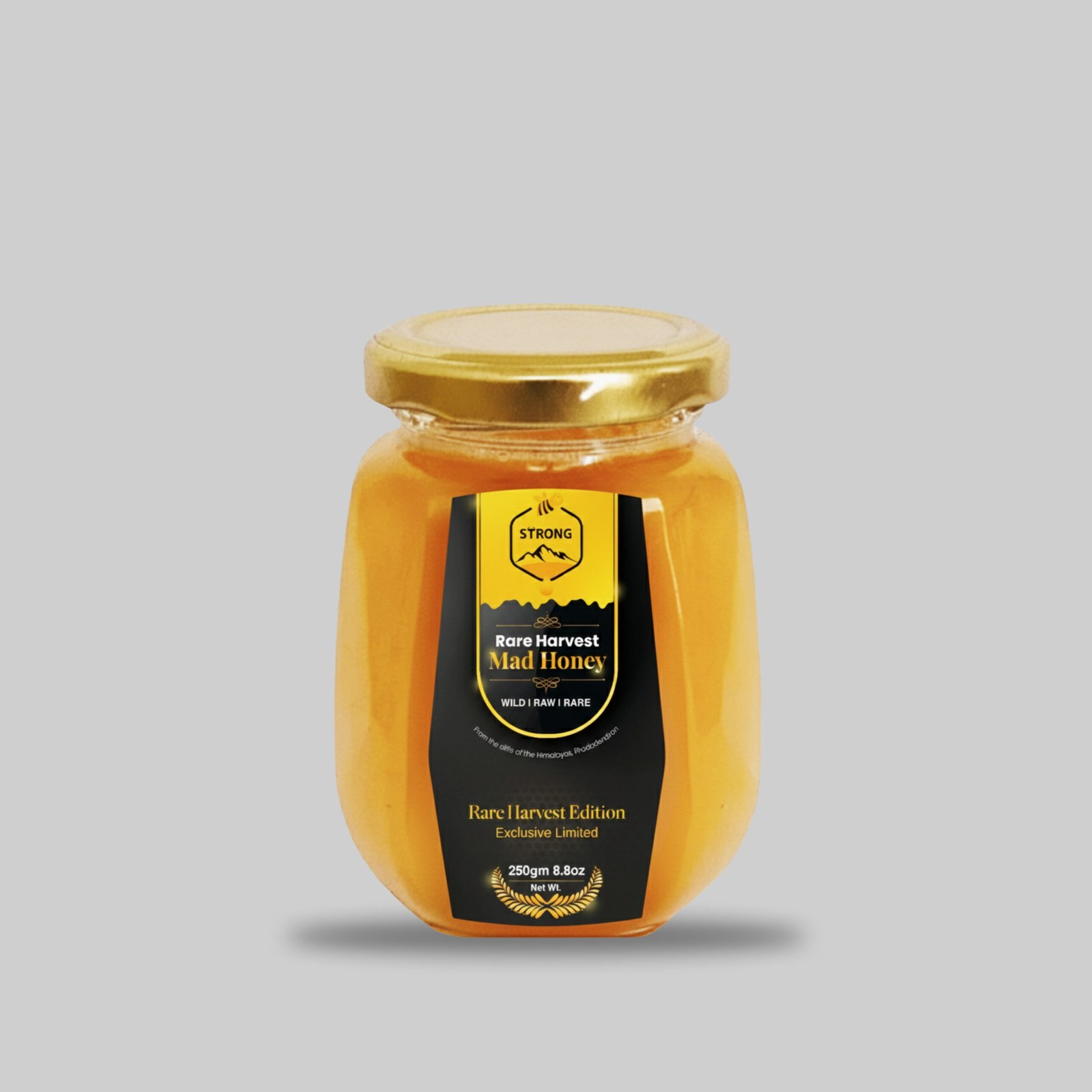
A colony can hold around 50,000 bees, and each forager makes only a tiny share of the honey. The FDA describes honey as a substance that bees make as food from flower nectar. That tiny output explains why honey takes so much work. If you want to see where wild harvested honey comes from, read our guide to Nepali mad honey and our complete guide to mad honey. Himalayan cliff honey comes from a different bee species, so lifespans there may differ from the numbers in this guide. You can also learn how to spot genuine honey in our guide to original mad honey, or read whether honey is vegan.
How Long Does a Honey Bee Live? FAQ
How long does a honey bee live?
It depends on her role. A summer worker lives 4 to 6 weeks, a winter worker 4 to 6 months, a drone 3 to 8 weeks, and a queen 2 to 5 years.
How long does a queen honey bee live?
Research reports an average of 1 to 2 years. Many beekeepers see 2 to 3 years, and some queens live up to 5 years. Colonies or beekeepers often replace her earlier.
How long does a worker honey bee live?
A summer worker lives about 4 to 6 weeks. A worker born in late autumn lives 4 to 6 months, and sometimes up to 8 months, because she spends winter inside the hive.
How long does a drone live?
A drone lives about 3 to 8 weeks. A drone that mates dies right after, and unmated drones are often pushed out of the hive in autumn.
How long does a honey bee live after stinging?
A worker dies within minutes to a few hours after stinging a mammal, because her barbed stinger tears out part of her abdomen. A queen can sting more than once.
Why do winter bees live longer than summer bees?
Winter bees do little work, raise no young, and carry more vitellogenin and fat reserves. Those changes slow aging and help them survive until spring.
How long do bees live in general?
It varies by species. Honey bee workers live weeks to months, a bumblebee queen up to a year, and most solitary bees live only a few weeks as adults.
Final Answer: How Long Does a Honey Bee Live?
A honey bee lives from a few weeks to a few years, depending on her role and the season. Summer workers live about 4 to 6 weeks, winter workers 4 to 6 months, drones about 3 to 8 weeks, and queens 2 to 5 years. The next time you see a bee on a flower, remember that her short life supports the whole colony. Planting flowers near your home is a simple way to help.
Sources and References
- https://pmc.ncbi.nlm.nih.gov/articles/PMC2527632
- https://pmc.ncbi.nlm.nih.gov/articles/PMC6723739
- https://tpwd.texas.gov/education/resources/keep-texas-wild/whats-the-buzzzz/background-for-teachers
- https://www.fda.gov/food/guidance-documents-regulatory-information-topic/guidance-industry-proper-labeling-honey-and-honey-products
Disclaimer: This article gives general information only. Bee lifespans vary by species, region, and colony conditions. If you have a severe reaction to a sting, seek medical care.