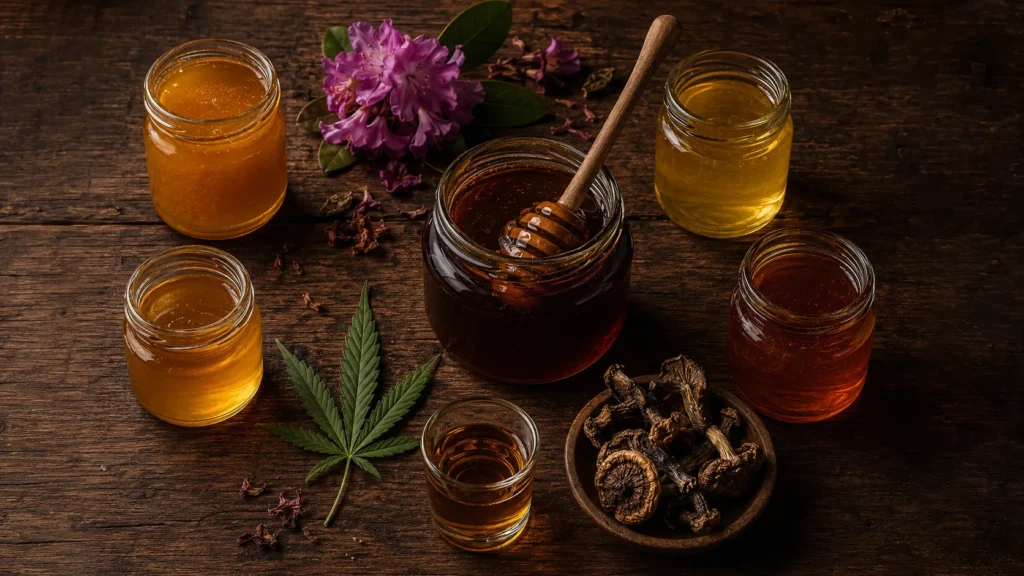
Mad honey looks like ordinary raw honey but behaves nothing like it. Harvested from the cliffs of Nepal where bees feed on rhododendron nectar, it carries natural compounds called grayanotoxins that set it apart from every other honey, sweetener, or wellness product on the market. People searching for mad honey often land here comparing it to things they already know — Manuka honey, regular honey, even cannabis or alcohol — trying to understand where it fits. Below is an honest, side-by-side look at how Himalayan mad honey compares to seven products people frequently mention in the same breath, so you can separate fact from forum myth before you buy.
Mad Honey vs Manuka Honey
Manuka honey is prized for its antibacterial strength, measured by its UMF or MGO rating, and it comes from bees foraging on the manuka bush in New Zealand and Australia. Mad honey comes from an entirely different plant family — wild rhododendron — and its defining trait isn’t antibacterial potency but the grayanotoxin content that gives it a distinct, warming effect the moment it’s consumed. Manuka is valued mainly as a functional food for gut and immune support; mad honey is valued as a traditional Himalayan remedy with a much more immediate, noticeable effect on the body. Texture and taste differ too — Manuka is thick and earthy, while genuine Himalayan mad honey is darker, slightly bitter, and less viscous. Neither should be judged as “better” than the other; they simply serve different purposes, and buyers often mistake mad honey’s rarity for a Manuka-style grading system when no such standard exists.
Mad Honey vs Regular Honey
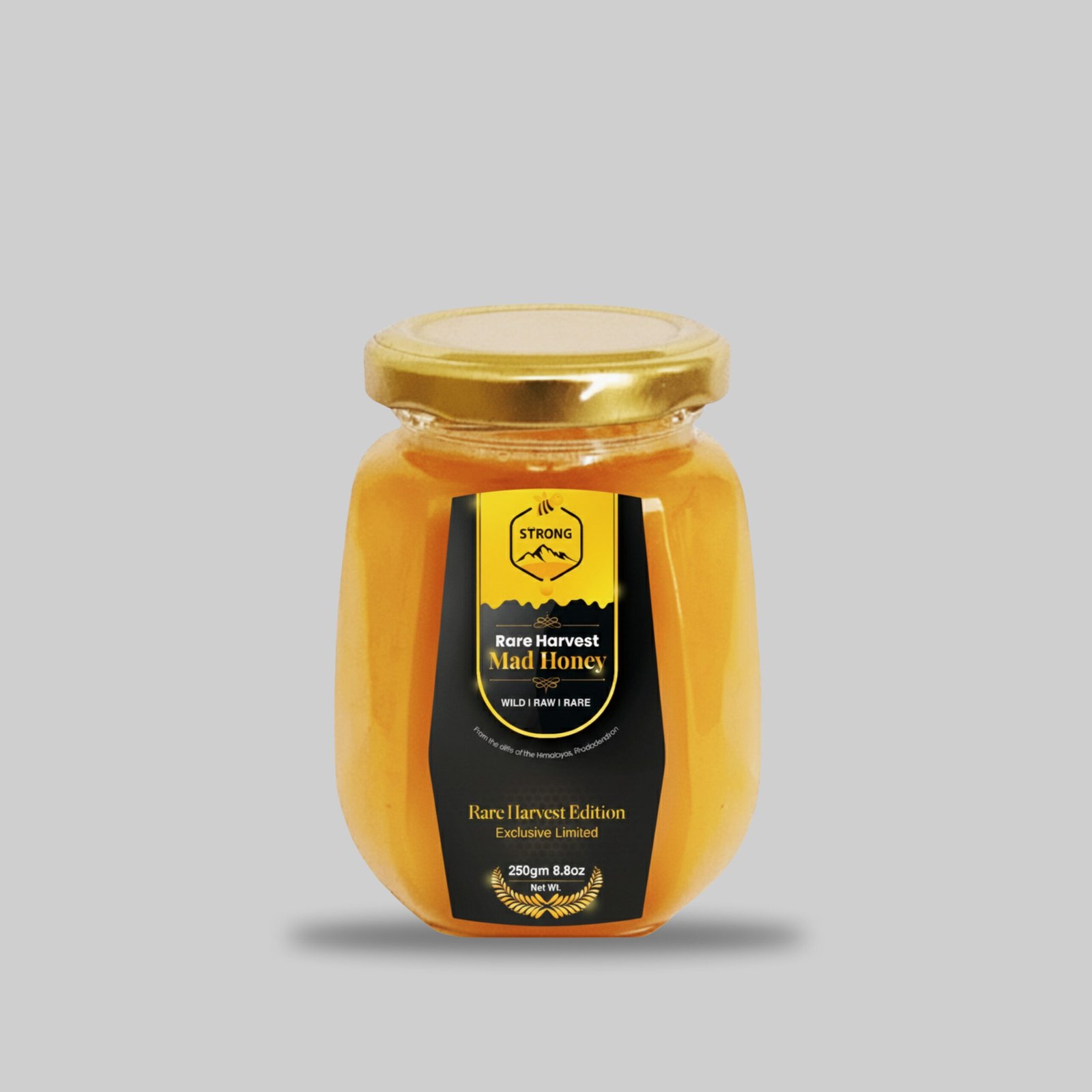
Regular honey is a shelf-stable sweetener made from nectar of common flowering plants, with no notable psychoactive or physiological effect beyond its sugar content and mild antioxidant properties. Mad honey is a specialty product harvested only twice a year from wild cliffside hives in specific regions of Nepal, and its grayanotoxin content is exactly what makes it rare and sought-after rather than an everyday pantry staple. Where regular honey can be eaten by the spoonful with no concern, mad honey is treated with far more caution and is not meant to be consumed the way you’d use table honey in tea or baking. Price reflects this difference sharply — authentic mad honey costs significantly more per jar due to the difficulty of harvesting it from steep cliff faces and the limited seasonal supply, unlike mass-produced regular honey available in any supermarket.
Mad Honey vs Turkish Honey
This comparison confuses a lot of first-time buyers because Turkish “deli bal” and Nepali mad honey are, biologically, the same category of product — both come from bees pollinating rhododendron species and both contain grayanotoxins. The real differences come down to sourcing, altitude, and rhododendron species. Nepali mad honey is harvested at extreme Himalayan altitudes from wild, undomesticated hives, which many buyers and long-time users consider to produce a stronger, more consistent potency than the lower-altitude Black Sea honey found in Turkey. Turkish mad honey has a longer commercial history in Western markets, while Himalayan mad honey has built its reputation more recently around its wild-harvested, small-batch origin. Neither is fake — both are legitimate mad honey — but sourcing region is the detail worth checking before you buy.
Mad Honey vs Cannabis
People sometimes group mad honey with cannabis because both are natural products associated with a noticeable bodily effect, but the comparison mostly ends there. Cannabis contains cannabinoids like THC and CBD that interact with the body’s endocannabinoid system, and its legal status varies dramatically by country and state. Mad honey’s grayanotoxins work through an entirely different mechanism, affecting sodium channels rather than cannabinoid receptors, and it is legal to purchase and import as a specialty food product in most countries, including the US and UK, unlike cannabis. The two are not interchangeable, are not meant to be combined, and come from completely unrelated biological sources — one is a honeybee product, the other a plant flower. Anyone using either should treat them as separate categories entirely, not substitutes for one another.
Mad Honey vs Alcohol
Alcohol is a fermented product that depresses the central nervous system, and its effects are well documented, dose-dependent, and legally regulated worldwide. Mad honey’s grayanotoxins act on the cardiovascular and nervous system through a different pathway, and because both substances can affect heart rate and blood pressure, reputable sources — including ours — do not recommend combining mad honey with alcohol under any circumstances. This isn’t a comparison of which is “stronger”; it’s a reminder that stacking two substances that both affect the cardiovascular system carries real risk. If you’re researching mad honey specifically to combine it with drinking, that’s the one use case worth ruling out entirely rather than testing.
Mad Honey vs Mushroom (Psychoactive Fungi)
Psychoactive mushrooms contain compounds like psilocybin that act on serotonin receptors in the brain, producing effects tied to perception and mood, and their legal status is tightly restricted in most parts of the world. Mad honey shares almost nothing in common with mushrooms beyond both being natural products people research out of curiosity — different kingdom of origin, different active compound, different mechanism, and a very different legal picture, since mad honey remains a legally traded food item in most jurisdictions. The comparison usually comes from people browsing “natural substances” content side by side, but biologically and legally the two don’t belong in the same conversation.
Mad Honey vs CBD
CBD is a non-intoxicating cannabinoid extracted from hemp, typically sold as oils, capsules, or edibles, and marketed mainly for relaxation and general wellness support with no notable acute physical effect. Mad honey, by contrast, produces a fast, noticeable bodily response shortly after consumption due to its grayanotoxin content, which is a fundamentally different experience than the slow-building, subtle profile most people associate with CBD. Regulation also differs — CBD sits in a legal gray zone in several countries depending on THC content and extraction method, while raw honey products like mad honey are generally classified simply as specialty food imports. If you’re looking for something mild and routine, CBD and mad honey are answering two very different questions.
Quick Comparison Table
| Product | Source | Key Difference from Mad Honey |
|---|---|---|
| Manuka Honey | Manuka bush, NZ/Australia | Antibacterial rating vs. grayanotoxin content |
| Regular Honey | Common wildflowers | No active compounds, everyday sweetener |
| Turkish Honey | Rhododendron, Black Sea region | Same category, lower altitude sourcing |
| Cannabis | Cannabis plant | Different compound, different legal status |
| Alcohol | Fermented grains/fruit | Should never be combined with mad honey |
| Psychoactive Mushrooms | Fungi | Different kingdom, different legal category |
| CBD | Hemp plant | Mild/slow onset vs. fast, noticeable effect |
Frequently Asked Questions
Is mad honey the same as Turkish deli bal?
They belong to the same category of rhododendron-derived honey, but Himalayan mad honey is harvested from wild, high-altitude hives in Nepal, while deli bal typically comes from lower-altitude Black Sea hives in Turkey.
Can mad honey be combined with alcohol or cannabis?
No. Mixing mad honey with alcohol or other substances that affect the cardiovascular or nervous system is not recommended and should be avoided entirely.
Is mad honey legal to buy?
In most countries, including the US and UK, mad honey is classified and sold as a specialty food import, unlike controlled substances such as cannabis or psychoactive mushrooms.
Why is mad honey more expensive than regular or Manuka honey?
Authentic mad honey is hand-harvested from steep Himalayan cliffs during a limited seasonal window, which makes supply far more limited than commercially farmed regular or Manuka honey.
For more on sourcing and authenticity, see our sister resource at Original Mad Honey, and for a broader look at how different Himalayan suppliers position their harvest, you can also read Everest Mad Honey. To explore our own authenticated batches, visit the shop page, or check common buyer questions on our FAQ page.


