
Mad Honey Benefits: What Traditional Use Says, and What Grayanotoxin Really Does
An honest, complete guide to Mad Honey’s traditional benefits, its effects, and the safety facts every buyer should read before trying authentic Himalayan Mad Honey.
What Is Mad Honey?
Mad Honey is a rare, wild honey produced by bees that forage on Rhododendron flowers growing on steep Himalayan cliffs in Nepal and mountain regions along Turkey’s Black Sea coast. Unlike ordinary honey, it has a darker color, a sharper, slightly bitter taste, and a natural compound called grayanotoxin — the reason it’s sometimes referred to as “mad” honey. It’s collected by hand, often by indigenous honey-hunting communities such as the Gurung people of Nepal, who climb exposed rock faces using rope ladders to reach wild hives — a practice that has continued largely unchanged for generations.
Quick Facts
- Also known as: deli bal, red honey, hallucinogenic honey
- Source plant: Rhododendron species
- Main regions: Nepal, Turkey (Black Sea)
- Key compound: Grayanotoxin
- Texture: Raw, thick, unfiltered
Rhododendron Honey: Why the Flower Matters
Why Mad Honey Is Sometimes Called "Hallucinogenic Honey"
401 BCE
Ottoman Era
The Nickname
What Does Mad Honey Do? Effects Explained
Mad Honey Benefits: What Traditional Use Says
Mad Honey is not an approved medical treatment, and we don’t present it as one. What follows are benefits associated with traditional, generational use in Himalayan and Anatolian communities — framed honestly, as tradition rather than clinical fact.
Traditional Energy Support
Traditional Relaxation
Digestive Comfort
Raw Nutrient Content
Cultural & Ceremonial Value
Raw Honey Antioxidants
Mad Honey Benefits for Men and Women
Mad Honey holds a particular place in traditional wellness practices across Nepal and Turkey, where small amounts have historically been shared as part of vitality-focused customs — traditionally associated with men’s physical labor, though women have played an equally important role in the broader tradition. These uses are cultural and traditional rather than clinically proven, but they’re a significant part of why Mad Honey built its reputation in the first place. Some buyers are also drawn to its separate, more debated reputation around libido, which we address honestly in its own guide. We’ve put together full breakdowns of these traditional uses, what’s supported by evidence, and what to realistically expect:
For Men
For Women
Libido
Grayanotoxins in Mad Honey: The Full Safety Picture
Before You Try Mad Honey, Know This:
- Start with far less than a regular spoonful. Sensitivity varies significantly between individuals.
- Never exceed the amount stated on your product’s packaging. More is not “more effective” — it’s simply riskier.
- Avoid entirely if you have a heart condition, low blood pressure, or take heart/blood pressure medication, unless your doctor has approved it. See our full guide on Mad Honey and Blood Pressure Risk.
- Do not combine with alcohol, sedatives, or other medications without medical advice.
- Pregnant or breastfeeding individuals should avoid Mad Honey entirely.
- Seek medical attention if you experience dizziness, blurred vision, excessive sweating, or an irregular heartbeat after consuming it.
How to Use Mad Honey Safely
If you’re trying Mad Honey for the first time, patience matters more than quantity. Take a very small taste — noticeably less than you would of regular honey — on its own, away from alcohol or medication, and wait at least 30–45 minutes before considering any more. Everyone’s body responds differently, so there is no “standard” amount that’s right for every person. Always follow the specific quantity guidance printed on your product label, since potency naturally varies batch to batch depending on the concentration of rhododendron nectar. If you’re unsure, the safest approach is always the smallest amount possible.
A Traditional Recipe: Honey Lemonade
Simple Honey Lemonade
Our Mad Honey Collection
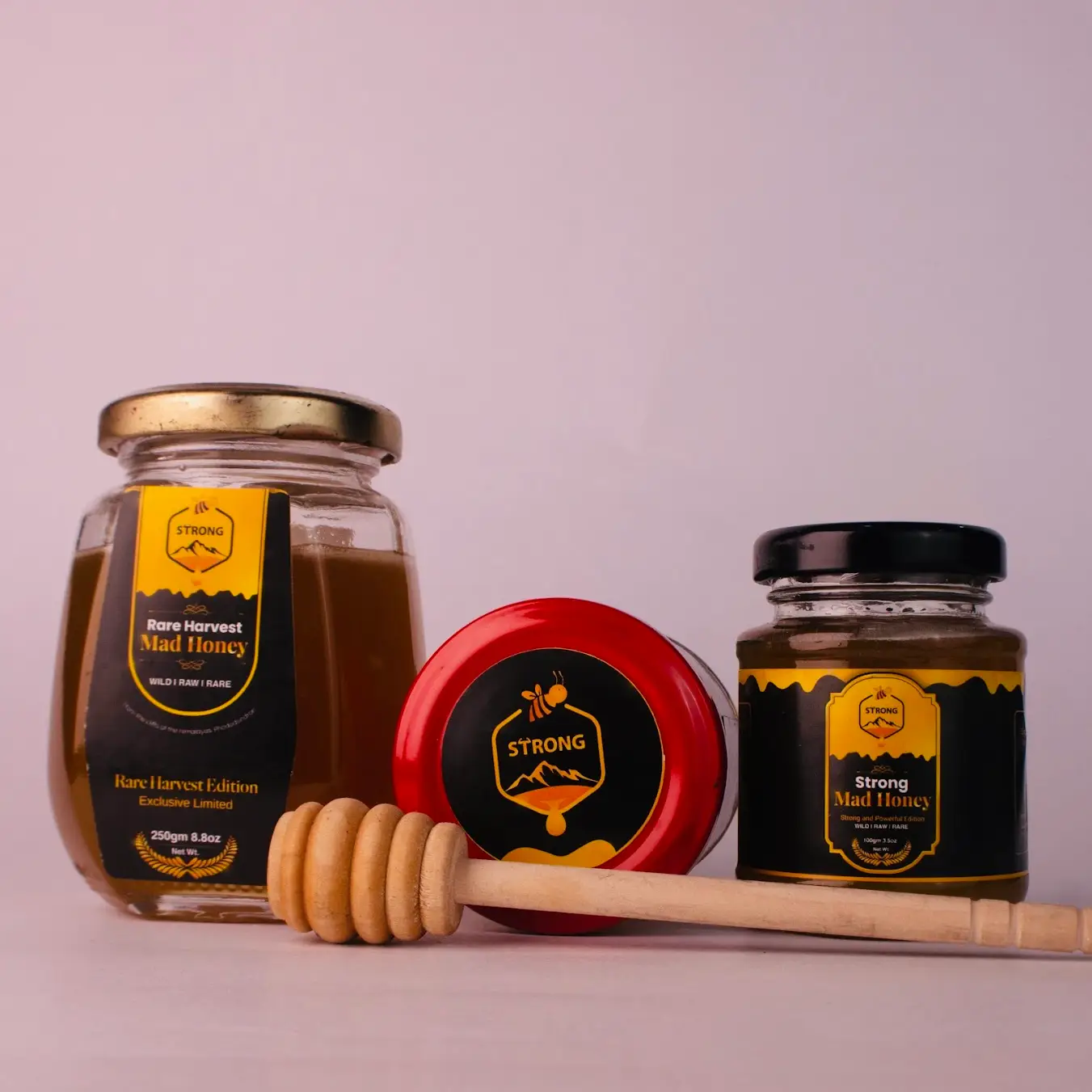
Rare Harvest Mad Honey
Medicinal Mad Honey
Trip Mad Honey
Sourcing & Authenticity
Explore Our Complete Mad Honey Library
Does Mad Honey Give Energy?
Mad Honey Relaxation Claims
Understanding Grayanotoxin
Mad Honey's Traditional History
Mad Honey Scientific Evidence
Mad Honey and Blood Pressure Risk
Frequently Asked Questions
Mad Honey is a rare honey produced from rhododendron nectar in Nepal and Turkey, containing grayanotoxin — a natural compound responsible for its distinctive effects.
In small amounts, it’s commonly associated with a warm, relaxing sensation and mild light-headedness. Effects vary by person and by how much is consumed.
Yes — it’s the same product. The nickname comes from grayanotoxin’s effect on the nervous system when consumed in larger amounts.
In small, carefully measured amounts it has been consumed traditionally for generations. Overconsumption can cause adverse effects — read the full safety section above before trying it.
Yes, in most countries, including the UK and USA, provided it’s imported and labeled according to local food-safety regulations.
Directly from trusted, transparent sources. See our UK delivery page or USA delivery page for region-specific ordering details.